


- Afhalen na 1 uur in een winkel met voorraad
- Gratis thuislevering in België vanaf € 30
- Ruim aanbod met 7 miljoen producten
- Afhalen na 1 uur in een winkel met voorraad
- Gratis thuislevering in België vanaf € 30
- Ruim aanbod met 7 miljoen producten





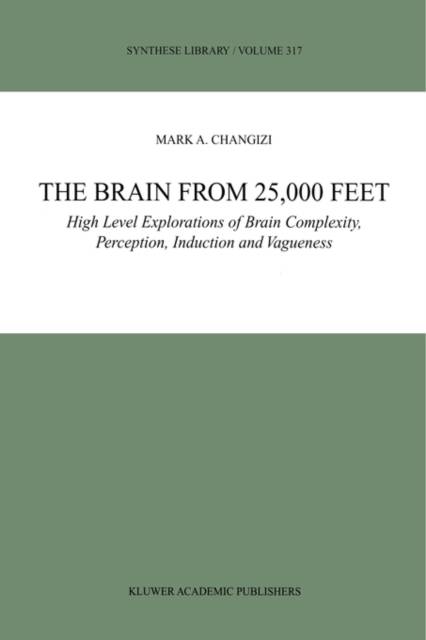
The Brain from 25,000 Feet
High Level Explorations of Brain Complexity, Perception, Induction and Vagueness
Mark A Changizi
€ 251,45
+ 502 punten
Omschrijving
In The Brain from 25,000 Feet, Mark A. Changizi defends a non-reductionist philosophy and applies it to a variety of problems in the brain sciences. Some of the key questions answered are as follows. Why do we see visual illusions, and why are illusions inevitable for any finite-speed vision machine? Why aren't brains universal learning machines, and what does the riddle of induction and its solution have to do with human learning and innateness? The author tackles such questions as why the brain is folded, and why animals have as many limbs as they do, explaining how these relate to principles of network optimality. He describes how most natural language words are vague and then goes on to explain the connection to the ultimate computational limits on machines. There is also a fascinating discussion of how animals accommodate greater behavioral complexity. This book is a must-read for researchers interested in taking a high-level, non-mechanistic approach to answering age-old fundamental questions in the brain sciences.
Specificaties
Betrokkenen
- Auteur(s):
- Uitgeverij:
Inhoud
- Aantal bladzijden:
- 330
- Taal:
- Engels
- Reeks:
- Reeksnummer:
- nr. 317
Eigenschappen
- Productcode (EAN):
- 9781402011764
- Verschijningsdatum:
- 31/03/2003
- Uitvoering:
- Hardcover
- Formaat:
- Genaaid
- Afmetingen:
- 156 mm x 234 mm
- Gewicht:
- 662 g


Alleen bij Standaard Boekhandel
+ 502 punten op je klantenkaart van Standaard Boekhandel
Cadeau

AANGERADEN


Beoordelingen
We publiceren alleen reviews die voldoen aan de voorwaarden voor reviews. Bekijk onze voorwaarden voor reviews.