


- Afhalen na 1 uur in een winkel met voorraad
- Gratis thuislevering in België vanaf € 30
- Ruim aanbod met 7 miljoen producten
- Afhalen na 1 uur in een winkel met voorraad
- Gratis thuislevering in België vanaf € 30
- Ruim aanbod met 7 miljoen producten




€ 78,95
+ 157 punten
Omschrijving
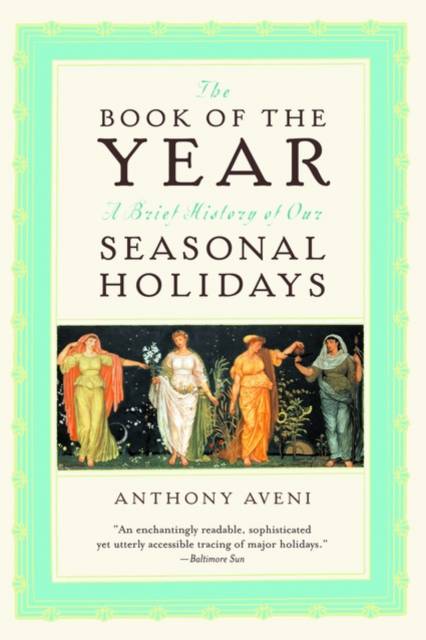
What is the connection between May Day and the Statue of Liberty? Between ancient solstice fires and Fourth of July fireworks? Between St. Valentine, the Groundhog, and the Virgin Mary? Why do people behave so bawdily during Mardi Gras? How has the significance and celebration of Christmas changed over the centuries?
In The Book of the Year, Anthony Aveni offers fascinating answers to these questions and explains the many ways humans throughout time have tried to order and give meaning to time's passing. Aveni traces the origins of modern customs tied to seasonal holidays, exploring what we eat (the egg at Easter, chocolate on St. Valentine's Day), the games we play (bobbing for apples on Halloween, football on Thanksgiving), the rituals we perform (dancing around the Maypole, making New Year's resolutions), and the colorful cast of characters we invent to dramatize holidays (Santa Claus, the Easter Bunny, the witches and goblins of Halloween). Along the way, Aveni illuminates everything from the Jack 'O Lantern and our faith in the predictive power of animals to the ways in which Labor Day reflects the great medieval "time wars," when the newly invented clock first pitted labor against management. The calendar and its holidays, Aveni writes, function as "a kind of metronome that keeps the beat of human activity tuned to the manifold overlapping cycles of life," to the ebb and flow of birth, growth, decay, and death
Vividly written, filled with facts both curious and astonishing, this engrossing book allows us to hear that beat more clearly and to understand more fully the rhythms we all dance to throughout the year.
In The Book of the Year, Anthony Aveni offers fascinating answers to these questions and explains the many ways humans throughout time have tried to order and give meaning to time's passing. Aveni traces the origins of modern customs tied to seasonal holidays, exploring what we eat (the egg at Easter, chocolate on St. Valentine's Day), the games we play (bobbing for apples on Halloween, football on Thanksgiving), the rituals we perform (dancing around the Maypole, making New Year's resolutions), and the colorful cast of characters we invent to dramatize holidays (Santa Claus, the Easter Bunny, the witches and goblins of Halloween). Along the way, Aveni illuminates everything from the Jack 'O Lantern and our faith in the predictive power of animals to the ways in which Labor Day reflects the great medieval "time wars," when the newly invented clock first pitted labor against management. The calendar and its holidays, Aveni writes, function as "a kind of metronome that keeps the beat of human activity tuned to the manifold overlapping cycles of life," to the ebb and flow of birth, growth, decay, and death
Vividly written, filled with facts both curious and astonishing, this engrossing book allows us to hear that beat more clearly and to understand more fully the rhythms we all dance to throughout the year.
Specificaties
Betrokkenen
- Auteur(s):
- Uitgeverij:
Inhoud
- Aantal bladzijden:
- 192
- Taal:
- Engels
Eigenschappen
- Productcode (EAN):
- 9780195171549
- Verschijningsdatum:
- 26/02/2004
- Uitvoering:
- Paperback
- Formaat:
- Trade paperback (VS)
- Afmetingen:
- 128 mm x 204 mm
- Gewicht:
- 249 g


Alleen bij Standaard Boekhandel
+ 157 punten op je klantenkaart van Standaard Boekhandel
Cadeau

AANGERADEN


Beoordelingen
We publiceren alleen reviews die voldoen aan de voorwaarden voor reviews. Bekijk onze voorwaarden voor reviews.