


- Afhalen na 1 uur in een winkel met voorraad
- Gratis thuislevering in België vanaf € 30
- Ruim aanbod met 7 miljoen producten
- Afhalen na 1 uur in een winkel met voorraad
- Gratis thuislevering in België vanaf € 30
- Ruim aanbod met 7 miljoen producten





Omschrijving
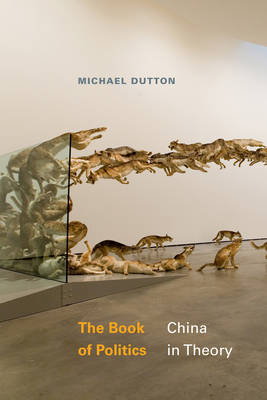
In The Book of Politics, Michael Dutton offers an affective theorization of the political and a political theorization of affect. Drawing on Western and Chinese social theory and practice, Dutton rethinks Carl Schmitt's insistence that the political can be thought of only within the antagonistic pairing of friend and enemy. Dutton shows how the power of the friend/enemy binary must be understood by conceptualizing the political as the channeling, harnessing, and transforming of affective energy flows in relation to that binary. Given this affective nature of politics, Dutton contends that to rethink the political means moving away from a political science toward an art of the political. Such an art highlights fluidity and pulls away from Eurocentric political theory, requiring a conceptualization of the political as global. He juxtaposes ancient Chinese cosmology, medicine, and Maoism against the monuments of early capitalist modernity such as the Crystal Palace and the Eiffel Tower to highlight the differences in political investments and intensities. From the Chinese revolution to the global rise of right-wing movements, Dutton rethinks politics in the contemporary world.
Specificaties
Betrokkenen
- Auteur(s):
- Uitgeverij:
Inhoud
- Aantal bladzijden:
- 440
- Taal:
- Engels
- Reeks:
Eigenschappen
- Productcode (EAN):
- 9781478025948
- Verschijningsdatum:
- 18/10/2024
- Uitvoering:
- Hardcover
- Formaat:
- Genaaid
- Afmetingen:
- 231 mm x 155 mm
- Gewicht:
- 839 g


Alleen bij Standaard Boekhandel
+ 360 punten op je klantenkaart van Standaard Boekhandel
Cadeau

AANGERADEN


Beoordelingen
We publiceren alleen reviews die voldoen aan de voorwaarden voor reviews. Bekijk onze voorwaarden voor reviews.