


- Afhalen na 1 uur in een winkel met voorraad
- Gratis thuislevering in België vanaf € 30
- Ruim aanbod met 7 miljoen producten
- Afhalen na 1 uur in een winkel met voorraad
- Gratis thuislevering in België vanaf € 30
- Ruim aanbod met 7 miljoen producten




€ 53,45
+ 106 punten
Omschrijving
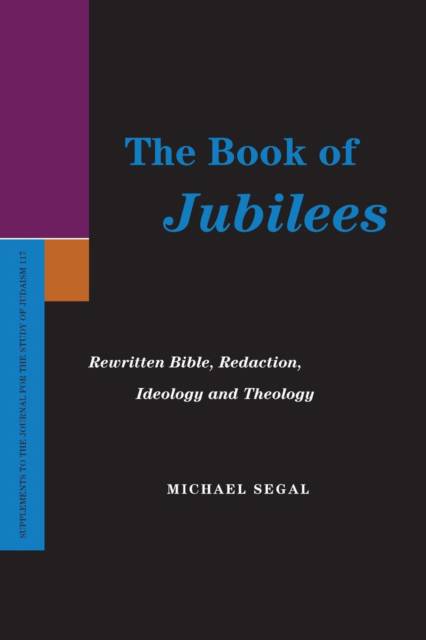
Jubilees is a pseudepigraphical composition from the second century BCE, which was preserved among the Dead Sea Scrolls. The book rewrites the Pentateuch until the Sinaitic revelation, by means of additions, omissions and other changes. Scholars tend to the view it as a unified work, composed by one author. In light of numerous contradictions, both in narrative details and in issues of biblical interpretation, Michael Segal suggests a new approach towards understanding the literary development of the work: a redactor relied upon extant sources, generally rewritten biblical narratives, and incorporated them into a new literary framework. The redactor's unique contribution can be identified in the chronological framework and the legal passages. The internal contradictions between the different literary genres are the result of the literary development of the book. This source-critical analysis reveals a unified, complete worldview in the redactional layer of the book, which can be summar
Specificaties
Betrokkenen
- Auteur(s):
- Uitgeverij:
Inhoud
- Aantal bladzijden:
- 386
- Taal:
- Engels
- Reeks:
Eigenschappen
- Productcode (EAN):
- 9781589837317
- Verschijningsdatum:
- 7/02/2013
- Uitvoering:
- Paperback
- Formaat:
- Trade paperback (VS)
- Afmetingen:
- 152 mm x 229 mm
- Gewicht:
- 562 g


Alleen bij Standaard Boekhandel
+ 106 punten op je klantenkaart van Standaard Boekhandel
Cadeau

AANGERADEN


Beoordelingen
We publiceren alleen reviews die voldoen aan de voorwaarden voor reviews. Bekijk onze voorwaarden voor reviews.