


- Afhalen na 1 uur in een winkel met voorraad
- Gratis thuislevering in België vanaf € 30
- Ruim aanbod met 7 miljoen producten
- Afhalen na 1 uur in een winkel met voorraad
- Gratis thuislevering in België vanaf € 30
- Ruim aanbod met 7 miljoen producten





Omschrijving
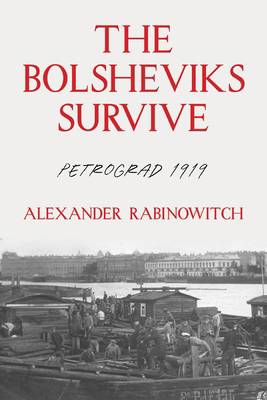
Petrograd, the imperial capital and the urban stage upon which virtually the entire Russian Revolution was enacted, in 1919 struggled through a year of civil war, hunger, social upheaval, and political and economic challenges. Based on exhaustive research in previously closed Russian archives, Alexander Rabinowitch authoritatively presents an in depth look at how Petrograd's local Soviet government and Bolshevik Party organizations struggled to implement the Bolshevik Party program, fight domestic and foreign counterrevolutionaries, quiet labor unrest, and provide food, fuel, and education to the local population. The methods and strategies used by the government and party organizations to organize public life and fight enemies, domestic and foreign, not only preserved the infant Soviet regime but proved to be the first manifestation of what would become the one-party authoritarian Soviet political system.
Specificaties
Betrokkenen
- Auteur(s):
- Uitgeverij:
Inhoud
- Aantal bladzijden:
- 384
- Taal:
- Engels
- Reeks:
Eigenschappen
- Productcode (EAN):
- 9780822949039
- Verschijningsdatum:
- 28/04/2026
- Uitvoering:
- Hardcover
- Formaat:
- Genaaid
- Afmetingen:
- 152 mm x 229 mm
- Gewicht:
- 680 g


Alleen bij Standaard Boekhandel
+ 407 punten op je klantenkaart van Standaard Boekhandel
Cadeau

AANGERADEN


Beoordelingen
We publiceren alleen reviews die voldoen aan de voorwaarden voor reviews. Bekijk onze voorwaarden voor reviews.