


- Afhalen na 1 uur in een winkel met voorraad
- Gratis thuislevering in België vanaf € 30
- Ruim aanbod met 7 miljoen producten
- Afhalen na 1 uur in een winkel met voorraad
- Gratis thuislevering in België vanaf € 30
- Ruim aanbod met 7 miljoen producten





€ 69,45
+ 138 punten
Omschrijving
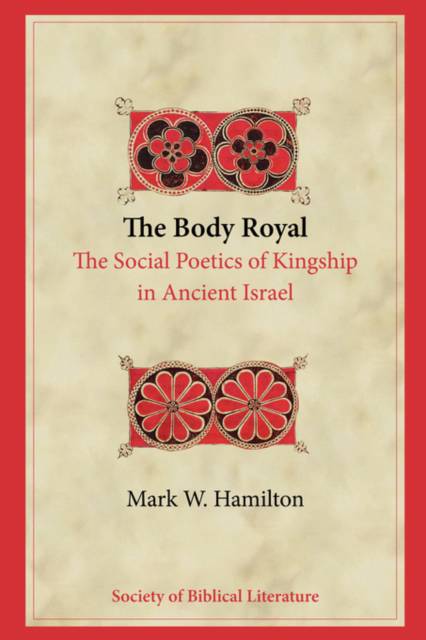
The present volume seeks to identify the underlying code of meanings about the Israelite king operating in various ways in texts and other artifacts surviving from the culture. The focus is upon the (living) body of the king, its anatomical characteristics, its constitution through ritual, and the conventions concerning its proper self-display by the king. This study combines careful linguistic and historical-critical analysis of the texts considered (both biblical and ancient Near Eastern, the latter used comparatively where appropriate) with a critical use of contemporary approaches to the study of signs in language, objects, and movements (semiotics), in general, and the study of the body, in particular. This book argues that the royal psalms contain a set of officially sanctioned notions about the royal body and its use. The king was thought to have an outsized, superhuman body owing to his being the son of the deity, a status he attained upon his coronation. Other texts, often from circles outside the royal court, significantly altered these notions. The king's body was thus for ancient Israelites the locus of reflection on power, gender, religion, and even international relations. Through careful historical analysis, it is possible to reconstruct the terms of an Iron Age intellectual inquiry that still influences our contemporary world.
Specificaties
Betrokkenen
- Auteur(s):
- Uitgeverij:
Inhoud
- Aantal bladzijden:
- 336
- Taal:
- Engels
- Reeks:
Eigenschappen
- Productcode (EAN):
- 9781589833821
- Verschijningsdatum:
- 22/10/2008
- Uitvoering:
- Paperback
- Formaat:
- Trade paperback (VS)
- Afmetingen:
- 152 mm x 229 mm
- Gewicht:
- 494 g


Alleen bij Standaard Boekhandel
+ 138 punten op je klantenkaart van Standaard Boekhandel
Cadeau

AANGERADEN


Beoordelingen
We publiceren alleen reviews die voldoen aan de voorwaarden voor reviews. Bekijk onze voorwaarden voor reviews.