


- Afhalen na 1 uur in een winkel met voorraad
- Gratis thuislevering in België vanaf € 30
- Ruim aanbod met 7 miljoen producten
- Afhalen na 1 uur in een winkel met voorraad
- Gratis thuislevering in België vanaf € 30
- Ruim aanbod met 7 miljoen producten





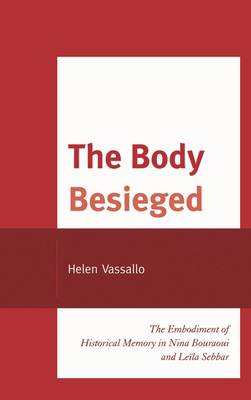
The Body Besieged
The Embodiment of Historical Memory in Nina Bouraoui and Leïla Sebbar
Helen Vassallo
€ 220,45
+ 440 punten
Omschrijving
The Body Beseiged: The Embodiment of Historical Memory in Nina Bouraoui and Leïla Sebbar by Helen Vassallo brings together the work of two important contemporary writers, Nina Bouraoui and Leïla Sebbar. Both authors embody a significant historical divide (they are half French and half Algerian), and each author's work returns unfailingly to the legacy of opposition engendered by the colonial past that France and Algeria share: neither Bouraoui nor Sebbar claims any intention to write about the Algerian War of Independence, and yet its impact is felt throughout all of the texts chosen for discussion. This inescapable omnipresence of the Algerian War is conceptualized here as "embodied memory," a corporeal impulse to write about a war whose legacy is transmitted to these "second-generation" writers rather than a conscious decision to engage with the historical aspect of their personal heritage. Both authors suffer a culturally imposed "de-territorialization" in their life and their early autobiographical narratives, and both subsequently undergo a voluntary "displacement," undertaking literal and psychological journeys to map out routes towards a sense of self, of belonging, and ultimately of "re-territorialization." However, the analysis reveals how this move from de-territorialization to re-territorialization is accompanied by a shift from internalization (through memory and silence) to externalization (via articulation and community): rather than using the individual as symbolic of the universal, Bouraoui's and Sebbar's life writing acknowledges that their experience begins with a universal, historical, or social context, and represents a personal act of remembrance which is key to the recovery of historical memory, and to the negotiation of an appropriate space for this memory. At a time of "reconciliation" and remembrance, the analysis exposes and probes open wounds in the Franco-Algerian relationship through a close focus on the autobiographical writings of two authors who embody both (hi)stories, and whose texts represent a site of this "embodied memory."
Specificaties
Betrokkenen
- Auteur(s):
- Uitgeverij:
Inhoud
- Aantal bladzijden:
- 180
- Taal:
- Engels
- Reeks:
Eigenschappen
- Productcode (EAN):
- 9780739171424
- Verschijningsdatum:
- 31/05/2012
- Uitvoering:
- Hardcover
- Formaat:
- Genaaid
- Afmetingen:
- 155 mm x 231 mm
- Gewicht:
- 430 g


Alleen bij Standaard Boekhandel
+ 440 punten op je klantenkaart van Standaard Boekhandel
Cadeau

AANGERADEN


Beoordelingen
We publiceren alleen reviews die voldoen aan de voorwaarden voor reviews. Bekijk onze voorwaarden voor reviews.