


- Afhalen na 1 uur in een winkel met voorraad
- Gratis thuislevering in België vanaf € 30
- Ruim aanbod met 7 miljoen producten
- Afhalen na 1 uur in een winkel met voorraad
- Gratis thuislevering in België vanaf € 30
- Ruim aanbod met 7 miljoen producten





€ 19,66
+ 19 punten
Eenvoudig bestellen
Veilig betalen


Onmiddellijk geleverd via e-mail
Omschrijving
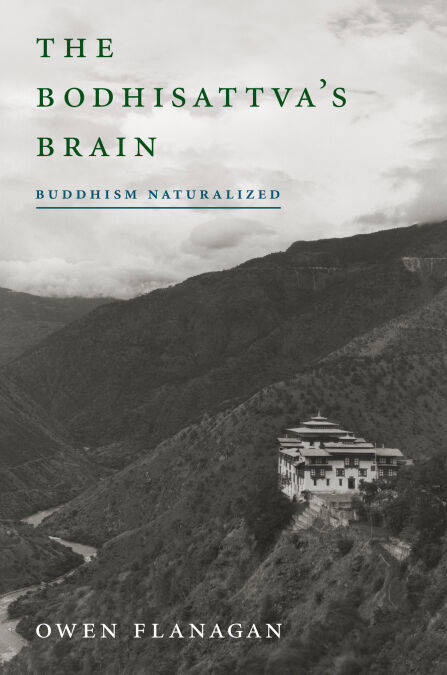
This fascinating introduction to the intersection between religion, neuroscience, and moral philosophy asks: Can there be a Buddhism without karma, nirvana, and reincarnation that is compatible with the rest of knowledge?
If we are material beings living in a material world—and all the scientific evidence suggests that we are—then we must find existential meaning, if there is such a thing, in this physical world. We must cast our lot with the natural rather than the supernatural. Many Westerners with spiritual (but not religious) inclinations are attracted to Buddhism—almost as a kind of moral-mental hygiene. But, as Owen Flanagan points out in The Bodhisattva's Brain, Buddhism is hardly naturalistic. In The Bodhisattva's Brain, Flanagan argues that it is possible to discover in Buddhism a rich, empirically responsible philosophy that could point us to one path of human flourishing.
Some claim that neuroscience is in the process of validating Buddhism empirically, but Flanagan'’ naturalized Buddhism does not reduce itself to a brain scan showing happiness patterns. “Buddhism naturalized,” as Flanagan constructs it, offers instead a fully naturalistic and comprehensive philosophy, compatible with the rest of knowledge—a way of conceiving of the human predicament, of thinking about meaning for finite material beings living in a material world.
If we are material beings living in a material world—and all the scientific evidence suggests that we are—then we must find existential meaning, if there is such a thing, in this physical world. We must cast our lot with the natural rather than the supernatural. Many Westerners with spiritual (but not religious) inclinations are attracted to Buddhism—almost as a kind of moral-mental hygiene. But, as Owen Flanagan points out in The Bodhisattva's Brain, Buddhism is hardly naturalistic. In The Bodhisattva's Brain, Flanagan argues that it is possible to discover in Buddhism a rich, empirically responsible philosophy that could point us to one path of human flourishing.
Some claim that neuroscience is in the process of validating Buddhism empirically, but Flanagan'’ naturalized Buddhism does not reduce itself to a brain scan showing happiness patterns. “Buddhism naturalized,” as Flanagan constructs it, offers instead a fully naturalistic and comprehensive philosophy, compatible with the rest of knowledge—a way of conceiving of the human predicament, of thinking about meaning for finite material beings living in a material world.
Specificaties
Betrokkenen
- Auteur(s):
- Uitgeverij:
Inhoud
- Aantal bladzijden:
- 280
- Taal:
- Engels
Eigenschappen
- Productcode (EAN):
- 9780262297233
- Verschijningsdatum:
- 11/08/2011
- Uitvoering:
- E-book
- Beveiligd met:
- Adobe DRM
- Formaat:
- ePub



Alleen bij Standaard Boekhandel
+ 19 punten op je klantenkaart van Standaard Boekhandel
CADEAU

AANGERADEN


Beoordelingen
We publiceren alleen reviews die voldoen aan de voorwaarden voor reviews. Bekijk onze voorwaarden voor reviews.