


- Afhalen na 1 uur in een winkel met voorraad
- Gratis thuislevering in België vanaf € 30
- Ruim aanbod met 7 miljoen producten
- Afhalen na 1 uur in een winkel met voorraad
- Gratis thuislevering in België vanaf € 30
- Ruim aanbod met 7 miljoen producten





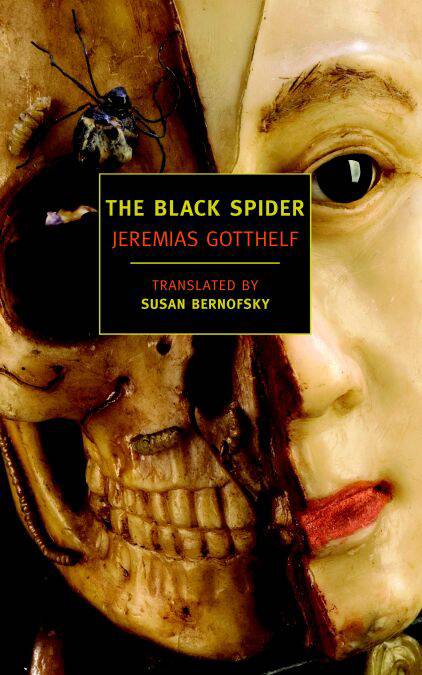
Omschrijving
An NYRB Classics Original
THE CLASSIC HORROR NOVEL: “Scary as hell . . . [Gotthelf] does something only the best horror writers, and the best preachers, can do: he puts the fear of God in you” (New York Times Book Review).
It is a sunny summer Sunday in a remote Swiss village, and a christening is being celebrated at a lovely old farmhouse. One of the guests notes an anomaly in the fabric of the venerable edifice: a blackened post that has been carefully built into a trim new window frame. Thereby hangs a tale, one that, as the wise old grandfather who has lived all his life in the house proceeds to tell it, takes one chilling turn after another, while his audience listens in appalled silence.
Featuring a cruelly overbearing lord of the manor and the oppressed villagers who must render him service, an irreverent young woman who will stop at nothing, a mysterious stranger with a red beard and a green hat, and, last but not least, the black spider, the tale is as riveting and appalling today as when Jeremias Gotthelf set it down more than 100 years ago. The Black Spider can be seen as a parable of evil in the heart or of evil at large in society (Thomas Mann saw it as foretelling the advent of Nazism), or as a vision, anticipating H. P. Lovecraft, of cosmic horror. There’s no question, in any case, that it is unforgettably creepy.
THE CLASSIC HORROR NOVEL: “Scary as hell . . . [Gotthelf] does something only the best horror writers, and the best preachers, can do: he puts the fear of God in you” (New York Times Book Review).
It is a sunny summer Sunday in a remote Swiss village, and a christening is being celebrated at a lovely old farmhouse. One of the guests notes an anomaly in the fabric of the venerable edifice: a blackened post that has been carefully built into a trim new window frame. Thereby hangs a tale, one that, as the wise old grandfather who has lived all his life in the house proceeds to tell it, takes one chilling turn after another, while his audience listens in appalled silence.
Featuring a cruelly overbearing lord of the manor and the oppressed villagers who must render him service, an irreverent young woman who will stop at nothing, a mysterious stranger with a red beard and a green hat, and, last but not least, the black spider, the tale is as riveting and appalling today as when Jeremias Gotthelf set it down more than 100 years ago. The Black Spider can be seen as a parable of evil in the heart or of evil at large in society (Thomas Mann saw it as foretelling the advent of Nazism), or as a vision, anticipating H. P. Lovecraft, of cosmic horror. There’s no question, in any case, that it is unforgettably creepy.
Specificaties
Betrokkenen
- Auteur(s):
- Vertaler(s):
- Uitgeverij:
Inhoud
- Aantal bladzijden:
- 120
- Taal:
- Engels
Eigenschappen
- Productcode (EAN):
- 9781590176955
- Verschijningsdatum:
- 7/10/2013
- Uitvoering:
- E-book
- Beveiligd met:
- Adobe DRM
- Formaat:
- ePub


Alleen bij Standaard Boekhandel
+ 14 punten op je klantenkaart van Standaard Boekhandel
CADEAU

AANGERADEN


Beoordelingen
We publiceren alleen reviews die voldoen aan de voorwaarden voor reviews. Bekijk onze voorwaarden voor reviews.