


- Afhalen na 1 uur in een winkel met voorraad
- Gratis thuislevering in België vanaf € 30
- Ruim aanbod met 7 miljoen producten
- Afhalen na 1 uur in een winkel met voorraad
- Gratis thuislevering in België vanaf € 30
- Ruim aanbod met 7 miljoen producten





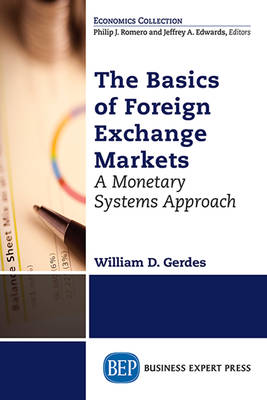
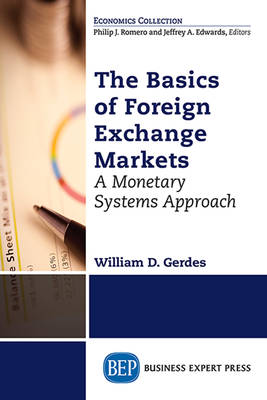
The Basics of Foreign Exchange Markets
A Monetary Systems Approach
William D Gerdes
Paperback | Engels
€ 30,95
+ 61 punten
Uitvoering
Omschrijving
In an increasingly interdependent global economy, an understanding of foreign exchange markets is more critical than ever. These markets are inextricably entwined with underlying monetary standards and consequently they are treated conjointly in this book. Four different foreign exchange rate regimes are analyzed including exchange rates under commodity money, fiduciary money, fiat money (with fixed exchange rates), and fiat money (with flexible exchange rates). For more than eight decades, most ountries have operated with fiat money. Proponents maintain that fiat money provides individual countries with much greater monetary autonomy. Yet both analytics and experience indicate that this is not always the case. Whether a country has more monetary autonomy depends on whether fiat money is paired with fixed or flexible exchange rates. Although flexible exchange rate regimes are not without their critics, it has become increasingly apparent that fiat money with flexible rates provides individual countries much greater monetary autonomy. This arrangement allows participants in foreign exchange markets greater latitude for adjusting to the wide variations in national monetary policies that are prevalent with fiat money. Several audiences may find this book beneficial: undergraduate students in economics and finance, students of inter- national business, graduate students, students in executive programs who need to expand their knowledge of international finance, and practicing executives and managers- especially those who are employed by companies operating globally.
Specificaties
Betrokkenen
- Auteur(s):
- Uitgeverij:
Inhoud
- Aantal bladzijden:
- 90
- Taal:
- Engels
Eigenschappen
- Productcode (EAN):
- 9781606498200
- Verschijningsdatum:
- 14/10/2014
- Uitvoering:
- Paperback
- Formaat:
- Trade paperback (VS)
- Afmetingen:
- 152 mm x 229 mm
- Gewicht:
- 154 g


Alleen bij Standaard Boekhandel
+ 61 punten op je klantenkaart van Standaard Boekhandel

Beoordelingen
We publiceren alleen reviews die voldoen aan de voorwaarden voor reviews. Bekijk onze voorwaarden voor reviews.