


- Afhalen na 1 uur in een winkel met voorraad
- Gratis thuislevering in België vanaf € 30
- Ruim aanbod met 7 miljoen producten
- Afhalen na 1 uur in een winkel met voorraad
- Gratis thuislevering in België vanaf € 30
- Ruim aanbod met 7 miljoen producten





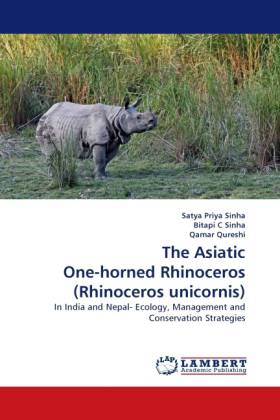
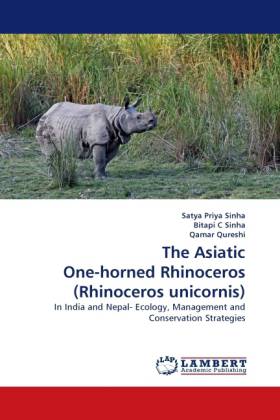
The Asiatic One-horned Rhinoceros (Rhinoceros unicornis)
In India and Nepal- Ecology, Management and Conservation Strategies
Satya Priya Sinha, Bitapi C Sinha, Qamar Qureshi
Paperback | Engels
€ 79,45
+ 158 punten
Omschrijving
Shorttitle The Asiatic one-horned Rhinoceros/ Greater Indian One-horned Rhinoceros (Rhinoceros unicornis) is endangered species of Indian mega fauna.Once Indian One-horned rhinoceros (Rhinoceros unicornis) roamed over the Indus, Gangetic to Brahamputra flood plains of the Indian sub- continent.At present the Great Indian One Horned Rhinoceros has total population of about 2800 animals in India and Nepal. In India, currently its population is restricted to four natural populations in Assam viz Kaziranga, Manas, Orang (Rajiv Gandhi WLS) and Pobitora, two natural populations in West Bengal viz Jaldapara and Gorumara and one re- introduced population in Dudhwa NP and one migratory population in Katerniaghat UP.In Nepal,the three rhino populations are in Royal Chitwan NP, Royal Bardia N.P and Sulkhlaphanta WLS. The Rhino of Royal Chitwan N.P. is a natural population while Royal Bardia NP and Sukhlaphanta WLS have the re- introduced population. The Kaziranga National Park in Assam (India) has the highest population of Rhino (2084) and Pobitora WLS (84 rhinos in 16 sq km area) followed by Royal Chitwan N.P. in Nepal (408 rhinos) in 2010.
Specificaties
Betrokkenen
- Auteur(s):
- Uitgeverij:
Inhoud
- Aantal bladzijden:
- 156
- Taal:
- Engels
Eigenschappen
- Productcode (EAN):
- 9783844311426
- Verschijningsdatum:
- 18/02/2011
- Uitvoering:
- Paperback
- Afmetingen:
- 152 mm x 229 mm
- Gewicht:
- 236 g


Alleen bij Standaard Boekhandel
+ 158 punten op je klantenkaart van Standaard Boekhandel
Cadeau

AANGERADEN


Beoordelingen
We publiceren alleen reviews die voldoen aan de voorwaarden voor reviews. Bekijk onze voorwaarden voor reviews.