


- Afhalen na 1 uur in een winkel met voorraad
- Gratis thuislevering in België vanaf € 30
- Ruim aanbod met 7 miljoen producten
- Afhalen na 1 uur in een winkel met voorraad
- Gratis thuislevering in België vanaf € 30
- Ruim aanbod met 7 miljoen producten





€ 41,95
+ 83 punten
Omschrijving
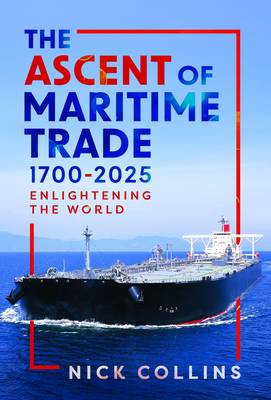
Maritime trade shapes world history, wealth, and ideas, revealing how foundational currents drive empires and modern economies.
Third volume of the critically-acclaimed series stressing maritime trade as the driver of world history, wealth-creation, technological inventiveness, art and literature. This book tackles the Maritime Enlightenment, which spurred economic liberalism and humanitarianism, unlike its continental version, breaking free from historic attitudes to slavery and serfdom, contextualising current debates on imperial history. The immediate cause of America's War of Independence is revealed to be about illegal maritime trade. Jefferson and Madison never understood the latent wealth-creating power of US trade, misdirecting energies for some years. US north-south divisions were exacerbated by trade tariffs more than slavery. The failure of France's Revolution and Germany's 20th-century wars were also failures to appreciate its importance. The post 1945 rise of Japan, Korea, Taiwan, Singapore, China and UAE were directly because of their encouragement of maritime trade and shipping. Britain's decline was heralded by political indifference then hostility, contrasting with its previous encouragement; its greatest strength. Nick's chapter on shipping's efforts to achieve net-zero is a must read for anyone involved in the green debate. Written by someone at the heart of maritime trade since the 1970s, the series is an important counterweight to political history we are usually fed, a different way of thinking about the world, past and present.
Third volume of the critically-acclaimed series stressing maritime trade as the driver of world history, wealth-creation, technological inventiveness, art and literature. This book tackles the Maritime Enlightenment, which spurred economic liberalism and humanitarianism, unlike its continental version, breaking free from historic attitudes to slavery and serfdom, contextualising current debates on imperial history. The immediate cause of America's War of Independence is revealed to be about illegal maritime trade. Jefferson and Madison never understood the latent wealth-creating power of US trade, misdirecting energies for some years. US north-south divisions were exacerbated by trade tariffs more than slavery. The failure of France's Revolution and Germany's 20th-century wars were also failures to appreciate its importance. The post 1945 rise of Japan, Korea, Taiwan, Singapore, China and UAE were directly because of their encouragement of maritime trade and shipping. Britain's decline was heralded by political indifference then hostility, contrasting with its previous encouragement; its greatest strength. Nick's chapter on shipping's efforts to achieve net-zero is a must read for anyone involved in the green debate. Written by someone at the heart of maritime trade since the 1970s, the series is an important counterweight to political history we are usually fed, a different way of thinking about the world, past and present.
Specificaties
Betrokkenen
- Auteur(s):
- Uitgeverij:
Inhoud
- Aantal bladzijden:
- 368
- Taal:
- Engels
Eigenschappen
- Productcode (EAN):
- 9781036138899
- Verschijningsdatum:
- 9/07/2026
- Uitvoering:
- Hardcover
- Formaat:
- Genaaid
- Afmetingen:
- 159 mm x 235 mm
- Gewicht:
- 616 g


Alleen bij Standaard Boekhandel
+ 83 punten op je klantenkaart van Standaard Boekhandel
Cadeau

AANGERADEN


Beoordelingen
We publiceren alleen reviews die voldoen aan de voorwaarden voor reviews. Bekijk onze voorwaarden voor reviews.