


- Afhalen na 1 uur in een winkel met voorraad
- Gratis thuislevering in België vanaf € 30
- Ruim aanbod met 7 miljoen producten
- Afhalen na 1 uur in een winkel met voorraad
- Gratis thuislevering in België vanaf € 30
- Ruim aanbod met 7 miljoen producten





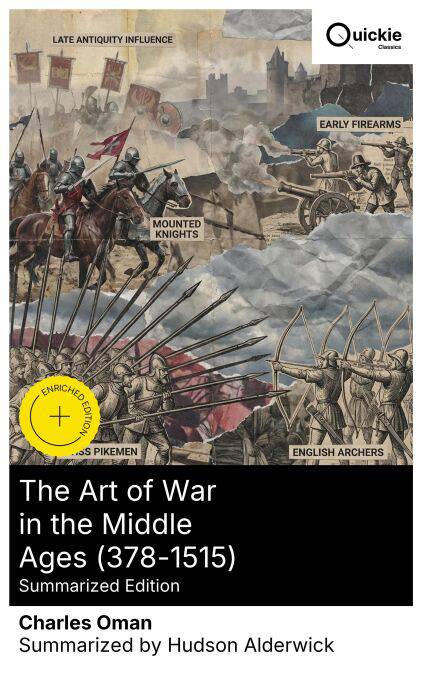
The Art of War in the Middle Ages (378-1515) (Summarized Edition) E-BOOK
Enriched edition. From Adrianople to Marignano: Knights, Longbowmen, Swiss Pike, and the Rise of Gunpowder Warfare
Charles Oman
E-book | Engels
€ 0,49
Omschrijving
Spanning from Adrianople (378) to Marignano (1515), Charles Oman's classic surveys the long transformation of European warfare from late Roman and Byzantine paradigms through the ascendancy of the mailed knight to the infantry revolutions of the longbowman, the Swiss pike, and early gunpowder. In lucid Victorian prose, Oman interweaves battle narratives—Hastings, Bouvines, Courtrai, Crécy, and Agincourt—with analysis of recruitment, armament, and command to show how social institutions molded tactics. His comparative method, grounded in close reading of chronicles, places the book at the birth of professional military historiography. A scholar of vast range and later Chichele Professor of Modern History at Oxford, Oman brought philological rigour and a campaign historian's eye to medieval sources. His training amid late nineteenth‑century debates on feudalism and state formation, and his lifelong interest in tactical evolution, shaped a project intent on disentangling legend from practice. This work remains indispensable for students of medieval studies, military history, and the history of technology. Even where subsequent archaeology and source criticism have refined particular conclusions, Oman's sweep, clarity, and taxonomic insight make the book a reliable scaffolding for further study and an invigorating guide to how Europeans learned to fight across a millennium.
Quickie Classics summarizes timeless works with precision, preserving the author's voice and keeping the prose clear, fast, and readable—distilled, never diluted. Enriched Edition extras: Introduction · Synopsis · Historical Context · Brief Analysis · 4 Reflection Q&As · Editorial Footnotes.
Quickie Classics summarizes timeless works with precision, preserving the author's voice and keeping the prose clear, fast, and readable—distilled, never diluted. Enriched Edition extras: Introduction · Synopsis · Historical Context · Brief Analysis · 4 Reflection Q&As · Editorial Footnotes.
Specificaties
Betrokkenen
- Auteur(s):
- Uitgeverij:
Inhoud
- Aantal bladzijden:
- 77
- Taal:
- Engels
Eigenschappen
- Productcode (EAN):
- 8596547893219
- Verschijningsdatum:
- 7/04/2026
- Uitvoering:
- E-book
- Beveiligd met:
- Digital watermarking
- Formaat:
- ePub


Alleen bij Standaard Boekhandel
Cadeau

AANGERADEN


Beoordelingen
We publiceren alleen reviews die voldoen aan de voorwaarden voor reviews. Bekijk onze voorwaarden voor reviews.