



Bedankt voor het vertrouwen het afgelopen jaar! Om jou te bedanken bieden we GRATIS verzending (in België) aan op alles gedurende de hele maand januari.
- Afhalen na 1 uur in een winkel met voorraad
- In januari gratis thuislevering in België
- Ruim aanbod met 7 miljoen producten
Bedankt voor het vertrouwen het afgelopen jaar! Om jou te bedanken bieden we GRATIS verzending (in België) aan op alles gedurende de hele maand januari.
- Afhalen na 1 uur in een winkel met voorraad
- In januari gratis thuislevering in België
- Ruim aanbod met 7 miljoen producten





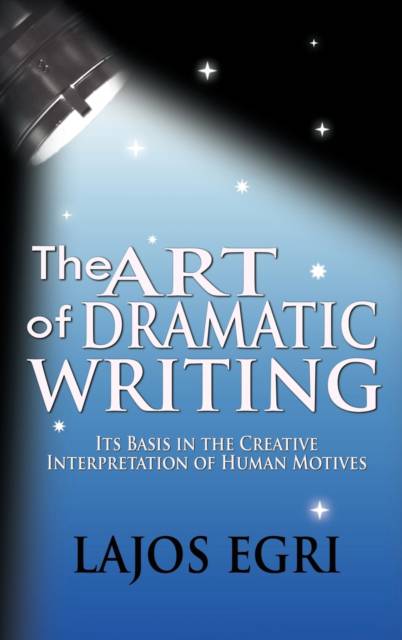
The Art Of Dramatic Writing
Its Basis In The Creative Interpretation Of Human Motives
Lajos Egri
Hardcover | Engels
€ 34,95
+ 69 punten
Uitvoering
Omschrijving
Amid the hundreds of "how-to" books that have appeared in recent years, there have been very few which attempted to analyze the mysteries of play-construction. This book does that - and its principles are so valid that they apply equally well to the short story, novel and screenplay. Lajos Egri examines a play from the inside out, starting with the heart of any drama: its characters. For it is people - their private natures and their inter-relationships - that move a story and give it life. All good dramatic writing depends upon an understanding of human motives. Why do people act as they do? What forces tranform a coward into a hero, a hero into a coward? What is it that Romeo does early in Shakespeare's play that makes his later suicide seem inevitable? Why must Nora leave her husband at the end of A Doll's House? These are a few of the fascinating problems which Egri analyzes. He shows how it is essential for the author to have a basic premise - a thesis, demonstrated in terms of human behavior - and to develop his dramatic conflict on the basis of that behavior. Premise, character, conflict: this is Egri's ABC. His book is a direct, jargon-free approach to the problem of achieving truth in a literary creation.
Specificaties
Betrokkenen
- Auteur(s):
- Uitgeverij:
Inhoud
- Aantal bladzijden:
- 138
- Taal:
- Engels
Eigenschappen
- Productcode (EAN):
- 9781607961307
- Verschijningsdatum:
- 19/05/2009
- Uitvoering:
- Hardcover
- Formaat:
- Genaaid
- Afmetingen:
- 156 mm x 234 mm
- Gewicht:
- 371 g


Alleen bij Standaard Boekhandel
+ 69 punten op je klantenkaart van Standaard Boekhandel
SOLDEN


Beoordelingen
We publiceren alleen reviews die voldoen aan de voorwaarden voor reviews. Bekijk onze voorwaarden voor reviews.