


- Afhalen na 1 uur in een winkel met voorraad
- Gratis thuislevering in België vanaf € 30
- Ruim aanbod met 7 miljoen producten
- Afhalen na 1 uur in een winkel met voorraad
- Gratis thuislevering in België vanaf € 30
- Ruim aanbod met 7 miljoen producten





€ 34,95
+ 69 punten
Eenvoudig bestellen
Veilig betalen


Gratis thuislevering vanaf € 30 (via bpost)
Gratis levering in je Standaard Boekhandel
Omschrijving
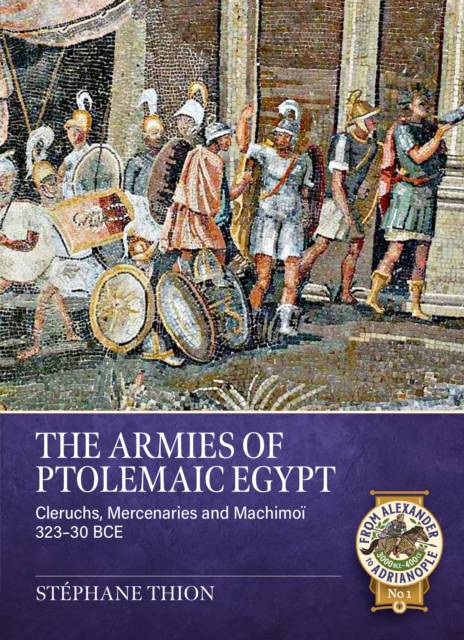
Egypt is the ideal starting point for anyone seeking to study the institutions of Alexander the Great's successors. No other Hellenistic kingdom is so fortunate in preserving such a wealth of sources, particularly in the military sphere. The surviving documents offer insights into the army, down to the level of individual commanders and soldiers. This army, heir to Macedonian traditions, is examined in detail in The Armies of Ptolemaic Egypt.
The organisation of the Ptolemaic army is traced across the centuries of its existence, balancing theoretical models with empirical evidence. Its evolution, shaped by the challenges of the age, emerges with clarity. One of the most striking features is the modernity of its structure. Far removed from the rigid pyramidal systems described by contemporary tacticians--especially Asclepiodotus in his Tactica-- the Ptolemaic organisation bears a surprising resemblance to that of seventeenth-century Europe.
The Armies of Ptolemaic Egypt is further enriched by numerous illustrations, many drawn from statuettes, frescoes, and painted stelae, which bring to life the appearance of the Ptolemaic soldier from the third to the first century BCE.
The organisation of the Ptolemaic army is traced across the centuries of its existence, balancing theoretical models with empirical evidence. Its evolution, shaped by the challenges of the age, emerges with clarity. One of the most striking features is the modernity of its structure. Far removed from the rigid pyramidal systems described by contemporary tacticians--especially Asclepiodotus in his Tactica-- the Ptolemaic organisation bears a surprising resemblance to that of seventeenth-century Europe.
The Armies of Ptolemaic Egypt is further enriched by numerous illustrations, many drawn from statuettes, frescoes, and painted stelae, which bring to life the appearance of the Ptolemaic soldier from the third to the first century BCE.
Specificaties
Betrokkenen
- Auteur(s):
- Uitgeverij:
Inhoud
- Aantal bladzijden:
- 184
- Taal:
- Engels
- Reeks:
Eigenschappen
- Productcode (EAN):
- 9781804518250
- Verschijningsdatum:
- 15/03/2026
- Uitvoering:
- Paperback
- Formaat:
- Trade paperback (VS)
- Afmetingen:
- 180 mm x 246 mm
- Gewicht:
- 453 g


Alleen bij Standaard Boekhandel
+ 69 punten op je klantenkaart van Standaard Boekhandel
CADEAU

AANGERADEN


Beoordelingen
We publiceren alleen reviews die voldoen aan de voorwaarden voor reviews. Bekijk onze voorwaarden voor reviews.