


- Afhalen na 1 uur in een winkel met voorraad
- Gratis thuislevering in België vanaf € 30
- Ruim aanbod met 7 miljoen producten
- Afhalen na 1 uur in een winkel met voorraad
- Gratis thuislevering in België vanaf € 30
- Ruim aanbod met 7 miljoen producten





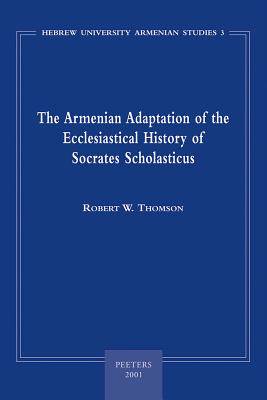
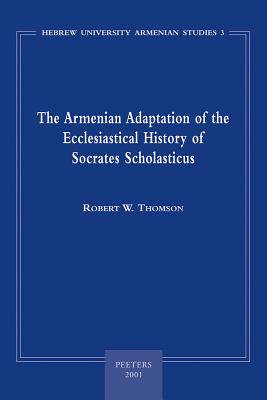
The Armenian Adaptation of the Ecclesiastical History of Socrates Scholasticus
Translation of the Armenian Text and Commentary
Rw Thomson
€ 45,00
+ 90 punten
Eenvoudig bestellen
Veilig betalen


Gratis thuislevering vanaf € 30 (via bpost)
Gratis levering in je Standaard Boekhandel
Omschrijving
The 'Ecclesiastical History' by Socrates Scholasticus had an unusual transmission in Armenia. In 695, the first translation (made in the sixth century) was completely revised. It was much abbreviated and changed, while at the same time additions of various kinds were introduced. Now, for the first time, that adapted text of the 'Ecclesiastical History' is translated from the classical Armenian. In this English rendering all the additions to the original text are highlighted and studied from the perspective of earlier Armenian literary and theological traditions. The Introduction assesses the possible motives for this adaption of a well known History at the end of the seventh century. Similar Armenian reworkings of foreign Histories -- the Georgian Chronicles and the Syriac Chronicle of the Patriarch Michael -- are much later. Within Armenia the secondary version of Socrates became more influential than the first, more exact translation. The present book is thus of value for the study of Armenian history and theology in the period following the break with the imperial church of Constantinople.
Specificaties
Betrokkenen
- Auteur(s):
- Uitgeverij:
Inhoud
- Aantal bladzijden:
- 256
- Taal:
- Engels
- Reeks:
- Reeksnummer:
- nr. 3
Eigenschappen
- Productcode (EAN):
- 9789042910270
- Verschijningsdatum:
- 20/11/2001
- Uitvoering:
- Paperback
- Formaat:
- Trade paperback (VS)
- Gewicht:
- 452 g


Alleen bij Standaard Boekhandel
+ 90 punten op je klantenkaart van Standaard Boekhandel
CADEAU

AANGERADEN


Beoordelingen
We publiceren alleen reviews die voldoen aan de voorwaarden voor reviews. Bekijk onze voorwaarden voor reviews.