


- Afhalen na 1 uur in een winkel met voorraad
- Gratis thuislevering in België vanaf € 30
- Ruim aanbod met 7 miljoen producten
- Afhalen na 1 uur in een winkel met voorraad
- Gratis thuislevering in België vanaf € 30
- Ruim aanbod met 7 miljoen producten





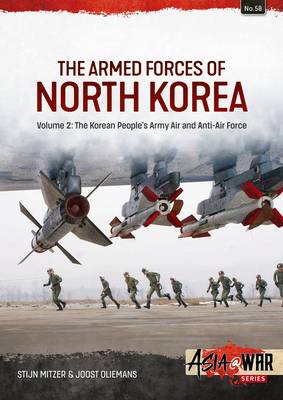
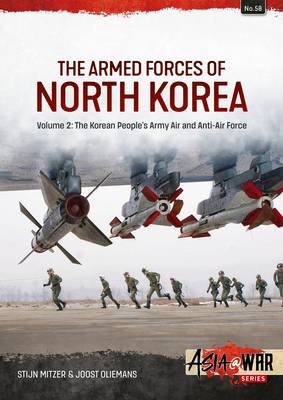
The Armed Forces of North Korea Volume 2
Korean People´s Army Air and Anti-Air Force
Stijn Mitzer, Joost Oliemans
€ 27,95
+ 55 punten
Omschrijving
"...offers a detailed examination of the Korean People's Army Air and Anti-Air Force, providing essential insight into one of the most enigmatic and consequential military organisations in the world today." - Aeroscale
Long dismissed as obsolete and overshadowed by the DPRK's nuclear and missile programmes, the Korean People's Army Air and Anti-Air Force (KPAAF) remains one of the least understood--and most frequently mischaracterised--air forces in the world. Operating under severe economic constraints and international sanctions, North Korea has nevertheless sustained a vast, complex and evolving air and air-defence system that continues to play a central role in its military doctrine.
This volume provides the most detailed and up-to-date examination available of North Korea's air power. It traces the historical development of the KPAAF from its origins in the Korean War through the Cold War and post-Soviet period, before analysing its current organisation, doctrine and operational concepts. The book examines the full breadth of the air force's capabilities, including fighter, ground-attack and bomber aviation; transport and helicopter forces; airbase infrastructure and underground facilities; training and readiness; and the integration of fixed and mobile air-defence systems.
Particular attention is paid to the KPAAF's aircraft inventory--much of it based on ageing Soviet and Chinese designs--and the extensive modification, upgrade and life-extension programmes that have kept these platforms operational far beyond their expected service lives. The book also explores North Korea's indigenous aircraft industry, its production of armament and electronics, and its increasingly ambitious unmanned aerial vehicle and loitering munition programmes, which represent some of the most dynamic developments in recent years.
Richly illustrated with rare photographs, colour profiles and original maps, this study places North Korean air power in its proper strategic and operational context, cutting through decades of speculation and misinformation. It demonstrates why the KPAAF, despite its limitations, cannot be dismissed--and why any serious assessment of military power on the Korean Peninsula must take its capabilities into account.
Originally published as part of The Armed Forces of North Korea: On the Path of Songun, this revised and expanded edition appears in the Asia@War series as Volume 2: The Korean People's Army Air and Anti-Air Force.
Long dismissed as obsolete and overshadowed by the DPRK's nuclear and missile programmes, the Korean People's Army Air and Anti-Air Force (KPAAF) remains one of the least understood--and most frequently mischaracterised--air forces in the world. Operating under severe economic constraints and international sanctions, North Korea has nevertheless sustained a vast, complex and evolving air and air-defence system that continues to play a central role in its military doctrine.
This volume provides the most detailed and up-to-date examination available of North Korea's air power. It traces the historical development of the KPAAF from its origins in the Korean War through the Cold War and post-Soviet period, before analysing its current organisation, doctrine and operational concepts. The book examines the full breadth of the air force's capabilities, including fighter, ground-attack and bomber aviation; transport and helicopter forces; airbase infrastructure and underground facilities; training and readiness; and the integration of fixed and mobile air-defence systems.
Particular attention is paid to the KPAAF's aircraft inventory--much of it based on ageing Soviet and Chinese designs--and the extensive modification, upgrade and life-extension programmes that have kept these platforms operational far beyond their expected service lives. The book also explores North Korea's indigenous aircraft industry, its production of armament and electronics, and its increasingly ambitious unmanned aerial vehicle and loitering munition programmes, which represent some of the most dynamic developments in recent years.
Richly illustrated with rare photographs, colour profiles and original maps, this study places North Korean air power in its proper strategic and operational context, cutting through decades of speculation and misinformation. It demonstrates why the KPAAF, despite its limitations, cannot be dismissed--and why any serious assessment of military power on the Korean Peninsula must take its capabilities into account.
Originally published as part of The Armed Forces of North Korea: On the Path of Songun, this revised and expanded edition appears in the Asia@War series as Volume 2: The Korean People's Army Air and Anti-Air Force.
Specificaties
Betrokkenen
- Auteur(s):
- Uitgeverij:
Inhoud
- Aantal bladzijden:
- 76
- Taal:
- Engels
- Reeks:
Eigenschappen
- Productcode (EAN):
- 9781806720309
- Verschijningsdatum:
- 30/03/2026
- Uitvoering:
- Paperback
- Formaat:
- Trade paperback (VS)
- Afmetingen:
- 206 mm x 292 mm
- Gewicht:
- 317 g


Alleen bij Standaard Boekhandel
+ 55 punten op je klantenkaart van Standaard Boekhandel
Cadeau

AANGERADEN


Beoordelingen
We publiceren alleen reviews die voldoen aan de voorwaarden voor reviews. Bekijk onze voorwaarden voor reviews.