


- Afhalen na 1 uur in een winkel met voorraad
- Gratis thuislevering in België vanaf € 30
- Ruim aanbod met 7 miljoen producten
- Afhalen na 1 uur in een winkel met voorraad
- Gratis thuislevering in België vanaf € 30
- Ruim aanbod met 7 miljoen producten





€ 48,45
+ 96 punten
Omschrijving
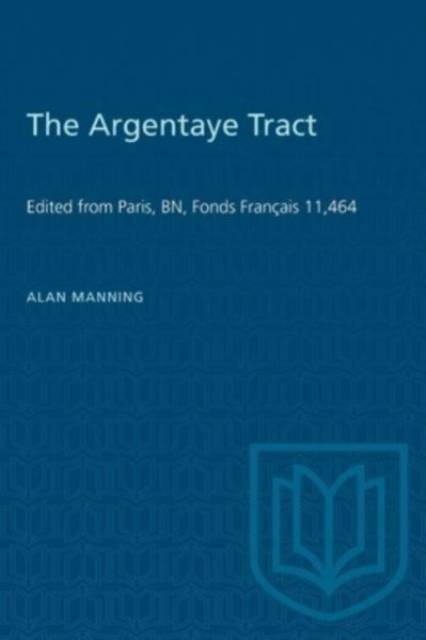
The Argentaye Tract, writing some time in the early fifteenth century, is a little-known heraldic treatise of which there appears to be only one extant copy. In this book, the first scholarly edition of any such treatise, Alan Manning presents the original text with extensive notes elucidating difficult passages and points of interest. The text is preceded by an introduction dealing with the present state of heraldic studies and with the history of heraldic treatises in England and France during the fourteenth and fifteenth centuries. It also gives a detailed description of the Argentaye tract's date, provenance, possible author, main divisions, social and psychological context, language, and influence.
Manning shows that, by the middle of the fifteenth century, a classical pattern had been developed and that all subsequent treatises were modelled on it. The Argentaye tract, however, represents an original departure from this classic model, certain sections of which it reorganized and expanded significantly.
Following the text of the tract itself are a glossary of heraldic terms, an index of proper names, and a bibliography. The fifty-six shield illustrations from the original text are reproduced.
Manning shows that, by the middle of the fifteenth century, a classical pattern had been developed and that all subsequent treatises were modelled on it. The Argentaye tract, however, represents an original departure from this classic model, certain sections of which it reorganized and expanded significantly.
Following the text of the tract itself are a glossary of heraldic terms, an index of proper names, and a bibliography. The fifty-six shield illustrations from the original text are reproduced.
Specificaties
Betrokkenen
- Auteur(s):
- Uitgeverij:
Inhoud
- Aantal bladzijden:
- 176
- Taal:
- Engels
- Reeks:
Eigenschappen
- Productcode (EAN):
- 9781487576998
- Verschijningsdatum:
- 15/12/1983
- Uitvoering:
- Paperback
- Formaat:
- Trade paperback (VS)
- Afmetingen:
- 156 mm x 234 mm
- Gewicht:
- 249 g



Alleen bij Standaard Boekhandel
+ 96 punten op je klantenkaart van Standaard Boekhandel
Cadeau

AANGERADEN


Beoordelingen
We publiceren alleen reviews die voldoen aan de voorwaarden voor reviews. Bekijk onze voorwaarden voor reviews.