


- Afhalen na 1 uur in een winkel met voorraad
- Gratis thuislevering in België vanaf € 30
- Ruim aanbod met 7 miljoen producten
- Afhalen na 1 uur in een winkel met voorraad
- Gratis thuislevering in België vanaf € 30
- Ruim aanbod met 7 miljoen producten





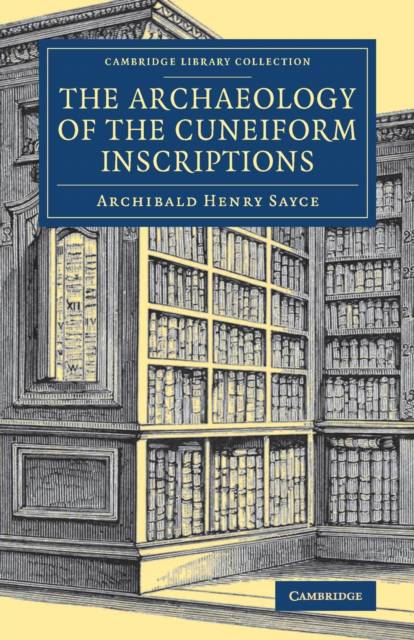
The Archaeology of the Cuneiform Inscriptions
Archibald Henry Sayce
€ 61,45
+ 122 punten
Omschrijving
Archibald Henry Sayce (1845-1933) became interested in Middle Eastern languages and scripts while still a teenager. Old Persian and Akkadian cuneiform had recently been deciphered, and popular enthusiasm for these discoveries was running high when Sayce began his academic career at Oxford in 1869. In this 1907 work, based on lectures delivered in Edinburgh in the previous year, he considers the state of archaeological knowledge of Babylonia and Assyria, which he describes as 'miserably deficient', and in particular the paradox of a huge number of cuneiform tablets in various languages drawn from many sites at which the original excavation had not provided an adequate context. Beginning with the history of the decipherment of cuneiform, Sayce goes on to describe what the tablets reveal of political and trade interactions among the different nations of the Near East and Asia Minor, and the relevance of these discoveries to Old Testament studies.
Specificaties
Betrokkenen
- Auteur(s):
- Uitgeverij:
Inhoud
- Aantal bladzijden:
- 258
- Taal:
- Engels
- Reeks:
Eigenschappen
- Productcode (EAN):
- 9781108082396
- Verschijningsdatum:
- 27/06/2019
- Uitvoering:
- Paperback
- Formaat:
- Trade paperback (VS)
- Afmetingen:
- 140 mm x 216 mm
- Gewicht:
- 331 g


Alleen bij Standaard Boekhandel
+ 122 punten op je klantenkaart van Standaard Boekhandel
Cadeau

AANGERADEN


Beoordelingen
We publiceren alleen reviews die voldoen aan de voorwaarden voor reviews. Bekijk onze voorwaarden voor reviews.