


- Afhalen na 1 uur in een winkel met voorraad
- Gratis thuislevering in België vanaf € 30
- Ruim aanbod met 7 miljoen producten
- Afhalen na 1 uur in een winkel met voorraad
- Gratis thuislevering in België vanaf € 30
- Ruim aanbod met 7 miljoen producten





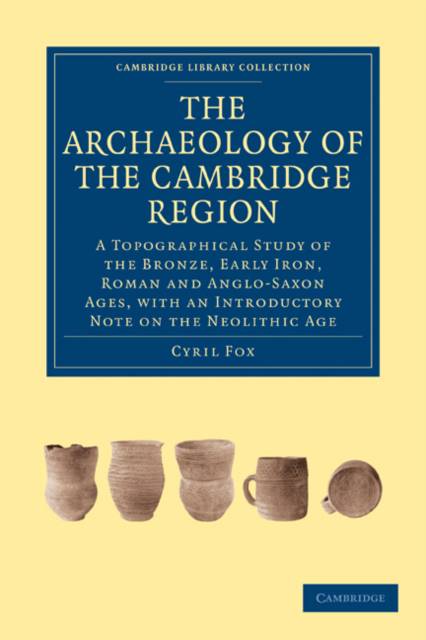
The Archaeology of the Cambridge Region
A Topographical Study of the Bronze, Early Iron, Roman and Anglo-Saxon Ages, with an Introductory Note on the Neolithic Age
Cyril Fox
€ 101,95
+ 203 punten
Omschrijving
Sir Cyril Fox (1882-1967) was an archaeologist and later Director of the National Museum of Wales and President of the Museums Association. Having entered Magdalene College, Cambridge as a mature student, his first year dissertation was judged to be more suitable as a PhD thesis, which resulted in him progressing straight to his PhD. His doctoral thesis, reissued here, transformed archaeological thought when it was first published in 1923. In it Fox pioneered the geographical approach to analysing ancient settlement patterns, linking the expansion of human settlement in the Cambridge area from the Neolithic era to the Anglo-Saxon period with favourable environmental conditions. His thesis emphasised the importance of treating archaeological finds as clues to past human settlement instead of being the main focus for archaeological analysis. This approach became the methodological framework for later environmental and landscape archaeology.
Specificaties
Betrokkenen
- Auteur(s):
- Uitgeverij:
Inhoud
- Aantal bladzijden:
- 492
- Taal:
- Engels
- Reeks:
Eigenschappen
- Productcode (EAN):
- 9781108011693
- Verschijningsdatum:
- 26/08/2010
- Uitvoering:
- Paperback
- Formaat:
- Trade paperback (VS)
- Afmetingen:
- 152 mm x 229 mm
- Gewicht:
- 716 g


Alleen bij Standaard Boekhandel
+ 203 punten op je klantenkaart van Standaard Boekhandel
Cadeau

AANGERADEN


Beoordelingen
We publiceren alleen reviews die voldoen aan de voorwaarden voor reviews. Bekijk onze voorwaarden voor reviews.