


- Afhalen na 1 uur in een winkel met voorraad
- Gratis thuislevering in België vanaf € 30
- Ruim aanbod met 7 miljoen producten
- Afhalen na 1 uur in een winkel met voorraad
- Gratis thuislevering in België vanaf € 30
- Ruim aanbod met 7 miljoen producten





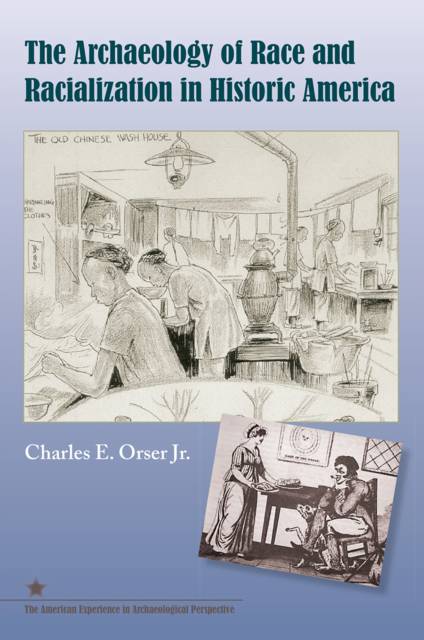
The Archaeology of Race and Racialization in Historic America
Charles E Orser
€ 38,45
+ 76 punten
Omschrijving
With the advent of this book, the ability of archaeologists to contribute to the study of race no longer can be doubted. By focusing on "racialization," the marginalizing process in which racial categories are imposed on groups of people based on some outward characteristic, Charles Orser shows how historical archaeology can contribute to the study of race through the conscious examination of material culture. He demonstrates this in two case studies, one from the Five Points excavation in New York City focusing on an immigrant Irish population, the second from a Chinese laundry in Stockton, California. Orser argues that race has not always been defined by skin color; through time, its meaning has changed. The process of racialization has marked most groups who came to the United States in the nineteenth and early twentieth centuries; this book demonstrates ways that historical archaeology can contribute to understanding a fundamental element of the American immigrant experience.
Specificaties
Betrokkenen
- Auteur(s):
- Uitgeverij:
Inhoud
- Aantal bladzijden:
- 232
- Taal:
- Engels
- Reeks:
Eigenschappen
- Productcode (EAN):
- 9780813031439
- Verschijningsdatum:
- 21/10/2007
- Uitvoering:
- Paperback
- Formaat:
- Trade paperback (VS)
- Afmetingen:
- 155 mm x 226 mm
- Gewicht:
- 335 g



Alleen bij Standaard Boekhandel
+ 76 punten op je klantenkaart van Standaard Boekhandel
Cadeau

AANGERADEN


Beoordelingen
We publiceren alleen reviews die voldoen aan de voorwaarden voor reviews. Bekijk onze voorwaarden voor reviews.