


- Afhalen na 1 uur in een winkel met voorraad
- Gratis thuislevering in België vanaf € 30
- Ruim aanbod met 7 miljoen producten
- Afhalen na 1 uur in een winkel met voorraad
- Gratis thuislevering in België vanaf € 30
- Ruim aanbod met 7 miljoen producten





€ 22,45
+ 44 punten
Omschrijving
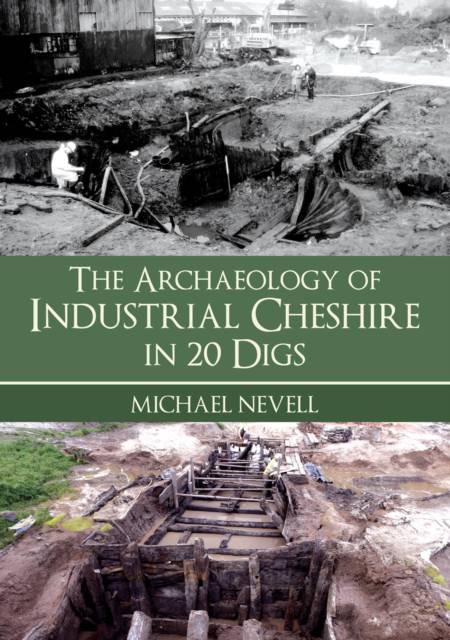
Cheshire contains some of the earliest inland saltworks, industrial canals, and purpose-built mechanized textile mills in Britain. The region's industrial story covers 2,000 years from the Romans to the Victorians and beyond. Drawing upon archaeological excavations over the last fifty years, this book looks at the physical remains of Cheshire's chief industries, salt, textiles, metal working, and transport, from its Roman beginnings to the area's role as the center of Britain's silk industry in the nineteenth century. Michael Nevell describes the excavation of Cheshire's internationally important industrial archaeology sites showing how this archaeological work has helped the study of not only the salt industries of Nantwich, Middlewich, and Northwich, but Chester's role as a port, especially in the eighteenth and nineteenth centuries, and the Bridgewater Canal, the first long-distance industrial canal, and its port at Runcorn. The area's largest industry in the eighteenth and nineteenth centuries, silk and cotton spinning, developed in eastern Cheshire and this area became Britain's silk-manufacturing center. The excavation of these textile mills, salt works, and transport networks reveals the impact of industrialization on the landscape and people of the area, and Cheshire's important role in the Industrial Revolution.
Specificaties
Betrokkenen
- Auteur(s):
- Uitgeverij:
Inhoud
- Aantal bladzijden:
- 96
- Taal:
- Engels
- Reeks:
Eigenschappen
- Productcode (EAN):
- 9781398124110
- Verschijningsdatum:
- 15/10/2025
- Uitvoering:
- Paperback
- Formaat:
- Trade paperback (VS)
- Afmetingen:
- 165 mm x 234 mm
- Gewicht:
- 306 g


Alleen bij Standaard Boekhandel
+ 44 punten op je klantenkaart van Standaard Boekhandel
Cadeau

AANGERADEN


Beoordelingen
We publiceren alleen reviews die voldoen aan de voorwaarden voor reviews. Bekijk onze voorwaarden voor reviews.