


- Afhalen na 1 uur in een winkel met voorraad
- Gratis thuislevering in België vanaf € 30
- Ruim aanbod met 7 miljoen producten
- Afhalen na 1 uur in een winkel met voorraad
- Gratis thuislevering in België vanaf € 30
- Ruim aanbod met 7 miljoen producten





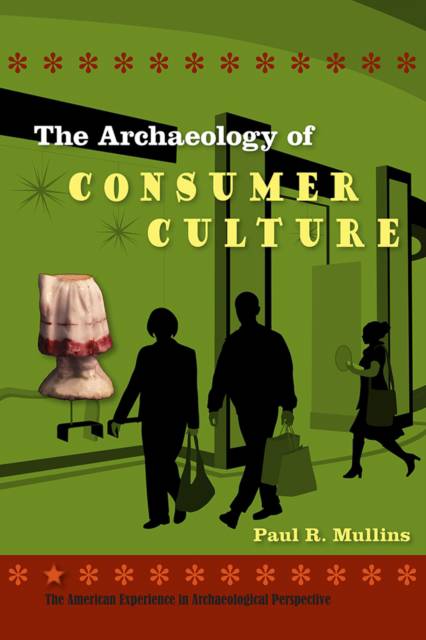
The Archaeology of Consumer Culture
Paul R Mullins
€ 30,45
+ 60 punten
Omschrijving
"Mullins has provided us a much-needed overview of the many ways that historical archaeologists in America have engaged the subject of consumption. He engages in a thoughtful conversation with a wide range of scholars--at once demonstrating historical archaeology's value to those outside of historical archaeology while also making connections, raising questions, and offering caveats for historical archaeologists to consider in future studies of the subject."--Hadley Kruczek-Aaron, coauthor of Investigations at a Nineteenth-Century Shaker Outfamily Farm in Ashburnham, Massachusetts Americans have long identified themselves with material goods. In this study, Paul Mullins sifts through this continent's historical archaeological record to trace the evolution of North American consumer culture. He explores the social and economic dynamics that have shaped American capitalism from the rise of mass production techniques of the eighteenth century to the unparalleled dominance of twentieth-century mass consumer culture. The last half-millennium has witnessed profound change in the face of a worldwide consumer revolution that has transformed labor relations, marketing, and household materialism. This pathbreaking research into consumption examines the concrete evidence of the transformation in individual households, across lines of difference, and over time. Mullins builds a case for how interdisciplinary scholarship and archaeology together provide a foundation for a rigorous, sophisticated, and challenging vision of consumption. Given that the material culture so often encountered by historical archaeologists speaks to the consumption patterns of past peoples, it is an essential and overdue addition to the historical archaeologist's canon. Paul R. Mullins, professor of anthropology at Indiana University-Purdue University Indianapolis, is the author of Race and Affluence: An Archaeology of African America and Consumer Culture and Glazed America: A History of the Doughnut.
Specificaties
Betrokkenen
- Auteur(s):
- Uitgeverij:
Inhoud
- Aantal bladzijden:
- 232
- Taal:
- Engels
- Reeks:
Eigenschappen
- Productcode (EAN):
- 9780813044439
- Verschijningsdatum:
- 15/09/2012
- Uitvoering:
- Paperback
- Formaat:
- Trade paperback (VS)
- Afmetingen:
- 152 mm x 229 mm
- Gewicht:
- 340 g


Alleen bij Standaard Boekhandel
+ 60 punten op je klantenkaart van Standaard Boekhandel
Cadeau

AANGERADEN


Beoordelingen
We publiceren alleen reviews die voldoen aan de voorwaarden voor reviews. Bekijk onze voorwaarden voor reviews.