


- Afhalen na 1 uur in een winkel met voorraad
- Gratis thuislevering in België vanaf € 30
- Ruim aanbod met 7 miljoen producten
- Afhalen na 1 uur in een winkel met voorraad
- Gratis thuislevering in België vanaf € 30
- Ruim aanbod met 7 miljoen producten





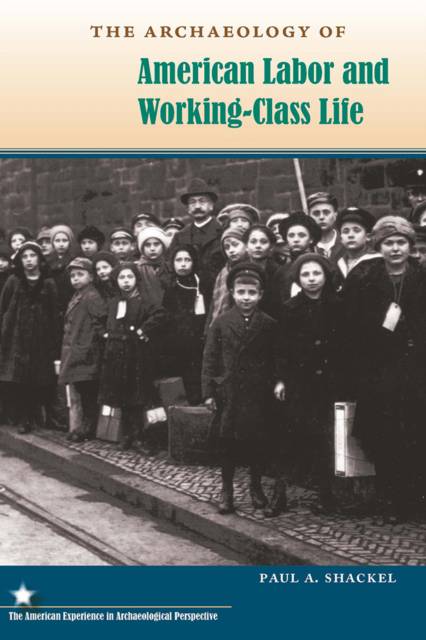
The Archaeology of American Labor and Working-Class Life
Paul a Shackel
€ 30,45
+ 60 punten
Omschrijving
"Shackel provides a compelling account of how an archaeology of working-class life can correct and enrich historical knowledge and improve public understanding of the American industrial experience."--Dean J. Saitta, University of Denver "A thorough, well-written overview of the issues confronting an archaeology of labor and the contributions historical archaeologists have made in addressing those issues. I would strongly recommend this book for anyone teaching historical archaeology or labor history at the university level."--Stephen A. Mrozowski, University of Massachusetts The winners write history. Thus, it is no surprise that the story of American industrialization is dominated by tales of unbridled technical and social progress. What happens, though, when we take a closer look at the archaeological record? That is the focus of Paul Shackel's new book, which examines labor and working-class life in nineteenth- and early twentieth-century industrial America. Shackel offers an overview of a number of ongoing archaeology projects that are focused on reconstructing the capital-labor relations of the past. He demonstrates that worker unrest has been a constant feature of industrialization, as the fight for fair wages and decent working conditions has been a continual one. He shows how workers resisted conditions through sabotage and how new immigrants dealt with daily life in company housing; he even reveals important information about conditions in strike camps.
Specificaties
Betrokkenen
- Auteur(s):
- Uitgeverij:
Inhoud
- Aantal bladzijden:
- 160
- Taal:
- Engels
- Reeks:
Eigenschappen
- Productcode (EAN):
- 9780813038025
- Verschijningsdatum:
- 26/07/2011
- Uitvoering:
- Paperback
- Formaat:
- Trade paperback (VS)
- Afmetingen:
- 152 mm x 229 mm
- Gewicht:
- 235 g



Alleen bij Standaard Boekhandel
+ 60 punten op je klantenkaart van Standaard Boekhandel
Cadeau

AANGERADEN


Beoordelingen
We publiceren alleen reviews die voldoen aan de voorwaarden voor reviews. Bekijk onze voorwaarden voor reviews.