


- Afhalen na 1 uur in een winkel met voorraad
- Gratis thuislevering in België vanaf € 30
- Ruim aanbod met 7 miljoen producten
- Afhalen na 1 uur in een winkel met voorraad
- Gratis thuislevering in België vanaf € 30
- Ruim aanbod met 7 miljoen producten





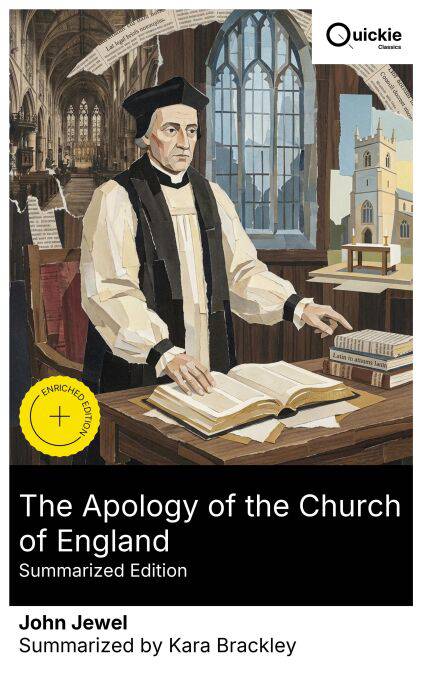
The Apology of the Church of England (Summarized Edition) E-BOOK
Enriched edition. Reformation-era defense of the English church with biblical proofs amid 16th-century Protestant controversies
John Jewel
E-book | Engels
€ 1,99
+ 1 punten
Omschrijving
The Apology of the Church of England (1562) is a lucid, forensic defense of the Elizabethan Settlement, arguing not innovation but a return to Scripture and the consensual teaching of the first centuries. In polished Latin humanist prose arranged like a legal brief, Jewel answers Roman charges on Scripture's sufficiency, the sacraments, images, saints, purgatory, clerical marriage, and papal supremacy, marshalling Augustine, Jerome, Chrysostom, and early councils. Firm yet irenic, the work situates an English via media within pan-Protestant apologetics while insisting on patristic continuity. John Jewel (1522–1571), bishop of Salisbury, was schooled at Oxford and tempered by Marian exile in Strasbourg and Zurich, under the tutelage of Peter Martyr Vermigli and the counsel of Bullinger. Returning under Elizabeth, he issued the famous 1559 Challenge Sermon at Paul's Cross, demanding Roman proofs from Scripture or the first six centuries; the Apology crystallizes that demand. Humanist training, pastoral responsibility, and the politics of the Settlement converge to produce a cool, documentary case for reform. Essential for students of Reformation theology, Anglican identity, and patristic reception, this classic rewards historians, theologians, and clergy alike with clarity, concision, and principled continuity without credulity.
Quickie Classics summarizes timeless works with precision, preserving the author's voice and keeping the prose clear, fast, and readable—distilled, never diluted. Enriched Edition extras: Introduction · Synopsis · Historical Context · Brief Analysis · 4 Reflection Q&As · Editorial Footnotes.
Quickie Classics summarizes timeless works with precision, preserving the author's voice and keeping the prose clear, fast, and readable—distilled, never diluted. Enriched Edition extras: Introduction · Synopsis · Historical Context · Brief Analysis · 4 Reflection Q&As · Editorial Footnotes.
Specificaties
Betrokkenen
- Auteur(s):
- Vertaler(s):
- Uitgeverij:
Inhoud
- Aantal bladzijden:
- 68
- Taal:
- Engels
Eigenschappen
- Productcode (EAN):
- 8596547879244
- Verschijningsdatum:
- 9/01/2026
- Uitvoering:
- E-book
- Beveiligd met:
- Digital watermarking
- Formaat:
- ePub


Alleen bij Standaard Boekhandel
+ 1 punten op je klantenkaart van Standaard Boekhandel
Cadeau

AANGERADEN


Beoordelingen
We publiceren alleen reviews die voldoen aan de voorwaarden voor reviews. Bekijk onze voorwaarden voor reviews.