


- Afhalen na 1 uur in een winkel met voorraad
- Gratis thuislevering in België vanaf € 30
- Ruim aanbod met 7 miljoen producten
- Afhalen na 1 uur in een winkel met voorraad
- Gratis thuislevering in België vanaf € 30
- Ruim aanbod met 7 miljoen producten





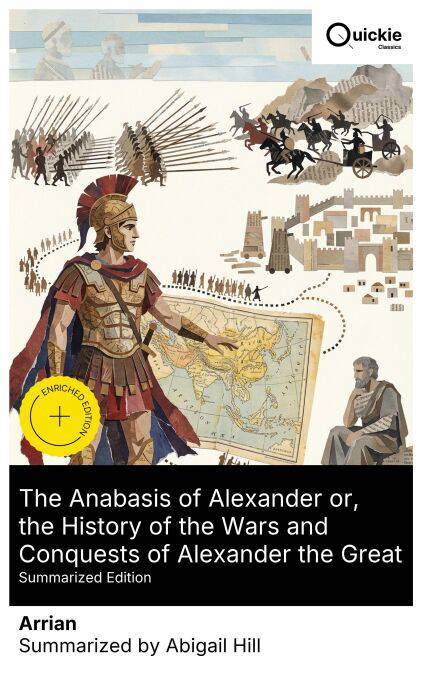
The Anabasis of Alexander or, the History of the Wars and Conquests of Alexander the Great (Summarized Edition) E-BOOK
Enriched edition. A Primary Source on Alexander the Great's Campaigns and Strategy
Arrian
E-book | Engels
€ 1,99
+ 1 punten
Eenvoudig bestellen
Veilig betalen


Onmiddellijk geleverd via e-mail
Omschrijving
Arrian's Anabasis of Alexander is a lucid, classicizing chronicle of the Macedonian's campaigns from the Hellespont to the Hyphasis. In measured, Xenophontic prose, it marries crisp battle narratives—Granicus, Issus, Gaugamela—to analyses of logistics, siegecraft, and provincial settlement, with ethnographic asides and sparing speeches. Rejecting the sensational Cleitarchan stream, Arrian foregrounds Ptolemy and Aristobulus to craft a sober, administratively minded history within the Second Sophistic milieu. Lucius Flavius Arrianus of Nicomedia—Greek litterateur and Roman senator—studied under Epictetus, later serving as consul and governor of Cappadocia, where he directed campaigns against the Alans. This administrative and military experience, coupled with Stoic moral training, shaped his preference for disciplined generalship and verifiable testimony. Modeling his work on Xenophon, he aimed to rescue Alexander from gossip by rigorous source criticism. Readers of ancient history, military studies, and leadership will find here the most reliable classical portrait of Alexander's campaigns. Begin with Arrian for sobriety and operational clarity, then compare with Curtius, Diodorus, and Plutarch; but as a study in strategy, statecraft, and evidence, this remains first choice.
Quickie Classics summarizes timeless works with precision, preserving the author's voice and keeping the prose clear, fast, and readable—distilled, never diluted. Enriched Edition extras: Introduction · Synopsis · Historical Context · Brief Analysis · 4 Reflection Q&As · Editorial Footnotes.
Quickie Classics summarizes timeless works with precision, preserving the author's voice and keeping the prose clear, fast, and readable—distilled, never diluted. Enriched Edition extras: Introduction · Synopsis · Historical Context · Brief Analysis · 4 Reflection Q&As · Editorial Footnotes.
Specificaties
Betrokkenen
- Auteur(s):
- Vertaler(s):
- Uitgeverij:
Inhoud
- Aantal bladzijden:
- 153
- Taal:
- Engels
Eigenschappen
- Productcode (EAN):
- 8596547882381
- Verschijningsdatum:
- 9/01/2026
- Uitvoering:
- E-book
- Beveiligd met:
- Digital watermarking
- Formaat:
- ePub


Alleen bij Standaard Boekhandel
+ 1 punten op je klantenkaart van Standaard Boekhandel
CADEAU

AANGERADEN


Beoordelingen
We publiceren alleen reviews die voldoen aan de voorwaarden voor reviews. Bekijk onze voorwaarden voor reviews.