


- Afhalen na 1 uur in een winkel met voorraad
- Gratis thuislevering in België vanaf € 30
- Ruim aanbod met 7 miljoen producten
- Afhalen na 1 uur in een winkel met voorraad
- Gratis thuislevering in België vanaf € 30
- Ruim aanbod met 7 miljoen producten





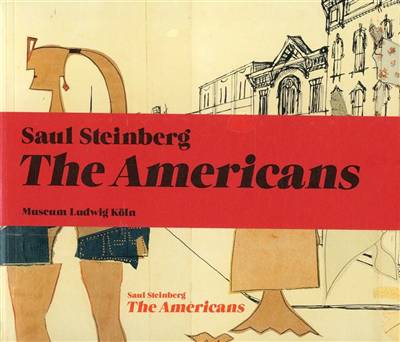
The Americans
Katalog zur Ausstellung im Museum Ludwig, Köln. Dtsch.-Engl.
Saul Steinberg
Paperback | Duits
€ 67,45
+ 134 punten
Omschrijving
The American Way of Life in 1958
On eight, free-standing panels with a total length of about seventy meters, Saul Steinberg designed an impressive collage for the American Pavilion at the 1958 World's Fair in Brussels about the American way of life and simply called it "The Americans". For the first time, the Museum Ludwig, Cologne will show the entire ensemble once more â supplemented by additional drawings, collages and magazine illustrations.
Saul Steinberg, born in Romania in 1914, died 1999 in New York, began to study architecture in Milan in 1932 and tried to emigrate to the United States in 1941 with a stamp in his passport which he had forged himself, only to be deported to the Dominican Republic. From there, he sent his drawings to the New Yorker which would finally successfully gain him entry to the United States. "The Americans" is the highlight of Saul Steinberg's artistic work which has brought him to prominence, above all as a gifted illustrator of the New Yorker. 1976 it was his labyrinthine cityscapes gracing the title page of the magazine that drew everyon'es attention and made him famous. The book extensively documents "The Americans", not only in several outstanding and wonderfull pictures, but for the first time shows the impressive mix of different media â drawing, photography, wallpaper patterns, wrapping paper and comic book fragments. Both the exhibition and the book are not only a rediscovery, but also allow for the first time an authentic look at the opportunities to encounter with the great urban and rural America, as it offered itself in the first World Fair in postwar Europe.
On eight, free-standing panels with a total length of about seventy meters, Saul Steinberg designed an impressive collage for the American Pavilion at the 1958 World's Fair in Brussels about the American way of life and simply called it "The Americans". For the first time, the Museum Ludwig, Cologne will show the entire ensemble once more â supplemented by additional drawings, collages and magazine illustrations.
Saul Steinberg, born in Romania in 1914, died 1999 in New York, began to study architecture in Milan in 1932 and tried to emigrate to the United States in 1941 with a stamp in his passport which he had forged himself, only to be deported to the Dominican Republic. From there, he sent his drawings to the New Yorker which would finally successfully gain him entry to the United States. "The Americans" is the highlight of Saul Steinberg's artistic work which has brought him to prominence, above all as a gifted illustrator of the New Yorker. 1976 it was his labyrinthine cityscapes gracing the title page of the magazine that drew everyon'es attention and made him famous. The book extensively documents "The Americans", not only in several outstanding and wonderfull pictures, but for the first time shows the impressive mix of different media â drawing, photography, wallpaper patterns, wrapping paper and comic book fragments. Both the exhibition and the book are not only a rediscovery, but also allow for the first time an authentic look at the opportunities to encounter with the great urban and rural America, as it offered itself in the first World Fair in postwar Europe.
Specificaties
Betrokkenen
- Auteur(s):
- Uitgeverij:
Inhoud
- Aantal bladzijden:
- 200
- Taal:
- Duits
Eigenschappen
- Productcode (EAN):
- 9783864420436
- Verschijningsdatum:
- 19/06/2013
- Uitvoering:
- Paperback
- Afmetingen:
- 231 mm x 260 mm
- Gewicht:
- 990 g


Alleen bij Standaard Boekhandel
+ 134 punten op je klantenkaart van Standaard Boekhandel

Beoordelingen
We publiceren alleen reviews die voldoen aan de voorwaarden voor reviews. Bekijk onze voorwaarden voor reviews.