


- Afhalen na 1 uur in een winkel met voorraad
- Gratis thuislevering in België vanaf € 30
- Ruim aanbod met 7 miljoen producten
- Afhalen na 1 uur in een winkel met voorraad
- Gratis thuislevering in België vanaf € 30
- Ruim aanbod met 7 miljoen producten





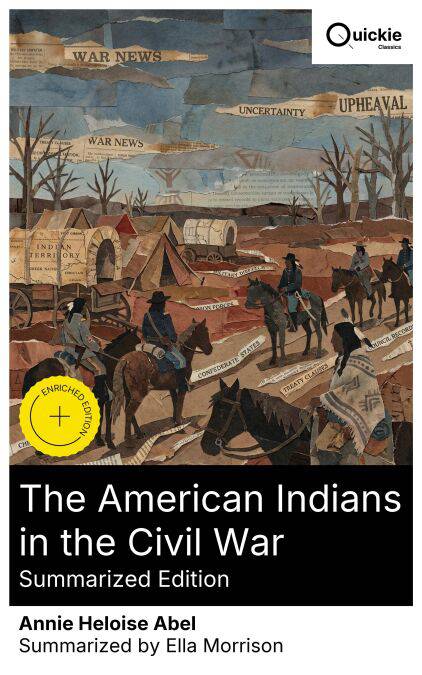
The American Indians in the Civil War (Summarized Edition) E-BOOK
Enriched edition. Native American Soldiers in the Civil War: Confederate Alliances, Pea Ridge, and Indian Territory Conflicts
Annie Heloise Abel
E-book | Engels
€ 1,99
+ 1 punten
Omschrijving
Annie Heloise Abel's The American Indians in the Civil War reconstructs the fractured wartime world of Indian Territory, tracing how Cherokee, Choctaw, Chickasaw, Creek, and Seminole communities negotiated divided loyalties, coerced treaties, refugee flight, and battlefield service. In lucid, judicious prose, Abel braids military dispatches, tribal council minutes, and Indian Office correspondence into a narrative that places Stand Watie, John Ross, and Native Union regiments within campaigns from Pea Ridge to Honey Springs. Her Progressive-era revisionism anticipates modern ethnohistory by centering sovereignty, kinship, and policy in equal measure. A British-born, early twentieth-century historian, Abel was among the first professional scholars to treat Native nations as principal actors in Civil War and Reconstruction history. Her transatlantic training and years in federal and regional archives yielded a meticulous documentary method; equally, her sustained engagement with treaty jurisprudence and removal-era precedents shaped the book's emphasis on diplomacy, subsistence crises, and the legal aftermath of wartime alliance. Scholars and readers will value this study for its source richness, analytic clarity, and corrective to Union–Confederate binaries. Assign it in courses on the Civil War, Native American history, or U.S. law and policy; keep it at hand as a durable reference and a compelling narrative.
Quickie Classics summarizes timeless works with precision, preserving the author's voice and keeping the prose clear, fast, and readable—distilled, never diluted. Enriched Edition extras: Introduction · Synopsis · Historical Context · Brief Analysis · 4 Reflection Q&As · Editorial Footnotes.
Quickie Classics summarizes timeless works with precision, preserving the author's voice and keeping the prose clear, fast, and readable—distilled, never diluted. Enriched Edition extras: Introduction · Synopsis · Historical Context · Brief Analysis · 4 Reflection Q&As · Editorial Footnotes.
Specificaties
Betrokkenen
- Auteur(s):
- Uitgeverij:
Inhoud
- Aantal bladzijden:
- 109
- Taal:
- Engels
Eigenschappen
- Productcode (EAN):
- 8596547883814
- Verschijningsdatum:
- 9/01/2026
- Uitvoering:
- E-book
- Beveiligd met:
- Digital watermarking
- Formaat:
- ePub


Alleen bij Standaard Boekhandel
+ 1 punten op je klantenkaart van Standaard Boekhandel
Cadeau

AANGERADEN


Beoordelingen
We publiceren alleen reviews die voldoen aan de voorwaarden voor reviews. Bekijk onze voorwaarden voor reviews.