


- Afhalen na 1 uur in een winkel met voorraad
- Gratis thuislevering in België vanaf € 30
- Ruim aanbod met 7 miljoen producten
- Afhalen na 1 uur in een winkel met voorraad
- Gratis thuislevering in België vanaf € 30
- Ruim aanbod met 7 miljoen producten





€ 5,77
+ 5 punten
Omschrijving
“A delightful look at the importance of compromise among friends.”—Kirkus
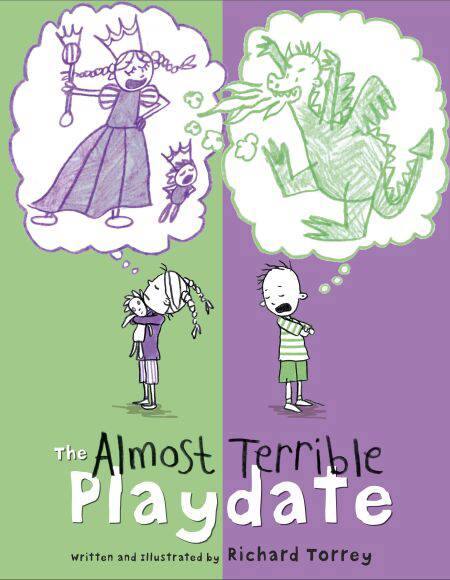
Ideal for all families who have ever heard (or said!) the words “Why can’t you both JUST GET ALONG?!”, here is the story of two young children with VERY different ideas of what they want to play. What starts with an innocent question (“What do you want to play?”) soon veers hilariously toward chaos, as two children engage in the age-old struggle of princesses, ponies, and ballet vs. dinosaurs, dragons, and race cars. Which child will win? Or will both find a way to play nicely together?
In a humorous mock–epic battle staged with crayon illustrations of each child’s increasingly steadfast and elaborate ideas of what they want to play, Richard Torrey taps into the charged and volatile emotions of childhood, which every parent and child will recognize with a smile. It’s a lighthearted and funny way to reflect on the ideas of sharing, cooperation, patience, and generosity.
“A clever story of dueling imaginations.”—School Library Journal
“A playful and accessible introduction to cooperation.”—Booklist
“Friendship, it seems, like make-believe, takes an act of imagination.”—The New York Times
Ideal for all families who have ever heard (or said!) the words “Why can’t you both JUST GET ALONG?!”, here is the story of two young children with VERY different ideas of what they want to play. What starts with an innocent question (“What do you want to play?”) soon veers hilariously toward chaos, as two children engage in the age-old struggle of princesses, ponies, and ballet vs. dinosaurs, dragons, and race cars. Which child will win? Or will both find a way to play nicely together?
In a humorous mock–epic battle staged with crayon illustrations of each child’s increasingly steadfast and elaborate ideas of what they want to play, Richard Torrey taps into the charged and volatile emotions of childhood, which every parent and child will recognize with a smile. It’s a lighthearted and funny way to reflect on the ideas of sharing, cooperation, patience, and generosity.
“A clever story of dueling imaginations.”—School Library Journal
“A playful and accessible introduction to cooperation.”—Booklist
“Friendship, it seems, like make-believe, takes an act of imagination.”—The New York Times
Specificaties
Betrokkenen
- Auteur(s):
- Uitgeverij:
Inhoud
- Aantal bladzijden:
- 40
- Taal:
- Engels
Eigenschappen
- Productcode (EAN):
- 9780553511000
- Verschijningsdatum:
- 15/02/2016
- Uitvoering:
- E-book
- Beveiligd met:
- Adobe DRM
- Formaat:
- ePub 3 Fixed Layout


Alleen bij Standaard Boekhandel
+ 5 punten op je klantenkaart van Standaard Boekhandel
Cadeau

AANGERADEN


Beoordelingen
We publiceren alleen reviews die voldoen aan de voorwaarden voor reviews. Bekijk onze voorwaarden voor reviews.