


- Afhalen na 1 uur in een winkel met voorraad
- Gratis thuislevering in België vanaf € 30
- Ruim aanbod met 7 miljoen producten
- Afhalen na 1 uur in een winkel met voorraad
- Gratis thuislevering in België vanaf € 30
- Ruim aanbod met 7 miljoen producten





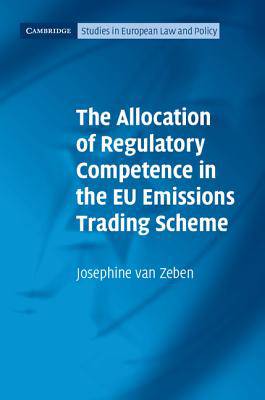
The Allocation of Regulatory Competence in the EU Emissions Trading Scheme
Josephine Van Zeben
€ 209,45
+ 418 punten
Omschrijving
The European Union's Emissions Trading System (EU ETS) is the world's largest carbon trading market. This book offers a new perspective on the EU ETS as a multi-level governance regime, in which the regulatory process is composed of three distinct 'competences' - norm setting, implementation, and enforcement. Are these competences best combined in a single regulator at one level of government or would they be better allocated among a variety of regulators at different levels of government? The combined legal, economic, and political analysis in this book reveals that the actual allocation of competences within the EU ETS diverges from a hypothetical ideal allocation in important ways, and provides a political economy explanation for the existing allocation of norm setting, implementation and enforcement competences among various levels of European government.
Specificaties
Betrokkenen
- Auteur(s):
- Uitgeverij:
Inhoud
- Aantal bladzijden:
- 280
- Taal:
- Engels
- Reeks:
Eigenschappen
- Productcode (EAN):
- 9781107042261
- Verschijningsdatum:
- 17/04/2014
- Uitvoering:
- Hardcover
- Formaat:
- Genaaid
- Afmetingen:
- 150 mm x 231 mm
- Gewicht:
- 498 g


Alleen bij Standaard Boekhandel
+ 418 punten op je klantenkaart van Standaard Boekhandel
Cadeau

AANGERADEN


Beoordelingen
We publiceren alleen reviews die voldoen aan de voorwaarden voor reviews. Bekijk onze voorwaarden voor reviews.