



Je cadeautjes zeker op tijd in huis hebben voor de feestdagen? Kom langs in onze winkels en vind het perfecte geschenk!
- Afhalen na 1 uur in een winkel met voorraad
- Gratis thuislevering in België vanaf € 30
- Ruim aanbod met 7 miljoen producten
Je cadeautjes zeker op tijd in huis hebben voor de feestdagen? Kom langs in onze winkels en vind het perfecte geschenk!
- Afhalen na 1 uur in een winkel met voorraad
- Gratis thuislevering in België vanaf € 30
- Ruim aanbod met 7 miljoen producten





€ 153,95
+ 307 punten
Omschrijving
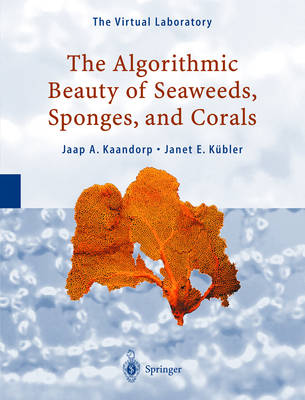
This book gives a state-of-the-art overview of modeling growth and form of marine sessile organisms - such as stromatolites, algae, and metazoans including stony corals, hydrocorals, octocorals, and sponges -, using large-scale computing techniques, scientific visualization, methods for analyzing 2D and 3D forms, and particle-based modeling techniques. It originates from the workshop on Modeling Growth and Form of Marine Sessile Organisms, held at the National Center for Ecological Analysis and Synthesis, Santa Barbara, California, August 1999. Experts from various disciplines including developmental biology, ecology, computer science, physics and mathematics, who have research interests in modeling the development of these organisms have been invited to contribute. The book describes all the steps required to develop and experimentally validate morphological models including collecting biological information and methods for specifying and comparing forms. Examples are given of how models are currently being applied to simulate growth and form of marine sessile organisms. Potential applications of growth models and morphological analyses in modern and paleo-bio-monitoring, the detection of environmental change, and the conservation and restoration of marine ecosystems and aquaculture are addressed. The combination of simulation models with laboratory and field experiments provides a powerful tool to obtain insights on how the growth forms of marine organisms emerge from physical, genetic and environmental influences.
Specificaties
Betrokkenen
- Auteur(s):
- Uitgeverij:
Inhoud
- Aantal bladzijden:
- 193
- Taal:
- Engels
- Reeks:
Eigenschappen
- Productcode (EAN):
- 9783540677000
- Verschijningsdatum:
- 28/09/2001
- Uitvoering:
- Hardcover
- Afmetingen:
- 213 mm x 20 mm
- Gewicht:
- 860 g


Alleen bij Standaard Boekhandel
+ 307 punten op je klantenkaart van Standaard Boekhandel
CADEAU


Beoordelingen
We publiceren alleen reviews die voldoen aan de voorwaarden voor reviews. Bekijk onze voorwaarden voor reviews.