


- Afhalen na 1 uur in een winkel met voorraad
- Gratis thuislevering in België vanaf € 30
- Ruim aanbod met 7 miljoen producten
- Afhalen na 1 uur in een winkel met voorraad
- Gratis thuislevering in België vanaf € 30
- Ruim aanbod met 7 miljoen producten





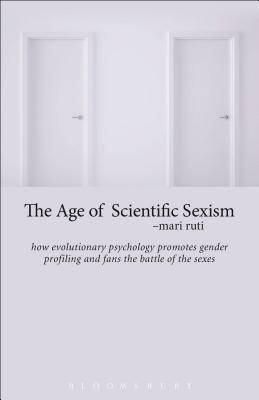
The Age of Scientific Sexism
How Evolutionary Psychology Promotes Gender Profiling and Fans the Battle of the Sexes
Mari Ruti
Hardcover | Engels
€ 339,45
+ 678 punten
Uitvoering
Omschrijving
We trust our sciences to operate on a plane of objectivity and fact in a world of subjectivity and cultural ideologies, but should we? In The Age of Scientific Sexism, philosopher Mari Ruti offers a sharp critique of the gender profiling tendencies of evolutionary psychology, untangling the insidious threads of various gender mythologies that have infiltrated-or perhaps even define-this faux-science.
Selling stereotypes as scientific facts, evolutionary psychology continually brings retrograde models of sexuality into mainstream culture: it insists that men and women live in two completely different psychological, emotional, and sexual universes, and that they will consequently always be locked in a vicious battle of the sexes. Among these regressive arguments is the assumption that men's sexuality is urgent and indiscriminate, whereas women are "naturally" reluctant, reticent, and choosy-a concept constructed to justify masculine behavior, such as cheating, that women have historically found painful. On its most basic level, The Age of Scientific Sexism explores our impulse to "explain" romantic behavior through science: in the increasingly egalitarian gender landscape of our society, why are we so eager to embrace the rampant gender profiling that evolutionary psychology promotes? Perhaps these simplistic gender caricatures owe their popularity, at least in part, to our overly pragmatic society pragmatic society, which encourages us to search for easy answers to complex questions.Specificaties
Betrokkenen
- Auteur(s):
- Uitgeverij:
Inhoud
- Aantal bladzijden:
- 224
- Taal:
- Engels
Eigenschappen
- Productcode (EAN):
- 9781628923803
- Verschijningsdatum:
- 30/07/2015
- Uitvoering:
- Hardcover
- Formaat:
- Genaaid
- Afmetingen:
- 140 mm x 216 mm
- Gewicht:
- 408 g


Alleen bij Standaard Boekhandel
+ 678 punten op je klantenkaart van Standaard Boekhandel
CADEAU

AANGERADEN


Beoordelingen
We publiceren alleen reviews die voldoen aan de voorwaarden voor reviews. Bekijk onze voorwaarden voor reviews.