


- Afhalen na 1 uur in een winkel met voorraad
- Gratis thuislevering in België vanaf € 30
- Ruim aanbod met 7 miljoen producten
- Afhalen na 1 uur in een winkel met voorraad
- Gratis thuislevering in België vanaf € 30
- Ruim aanbod met 7 miljoen producten





€ 67,95
+ 135 punten
Omschrijving
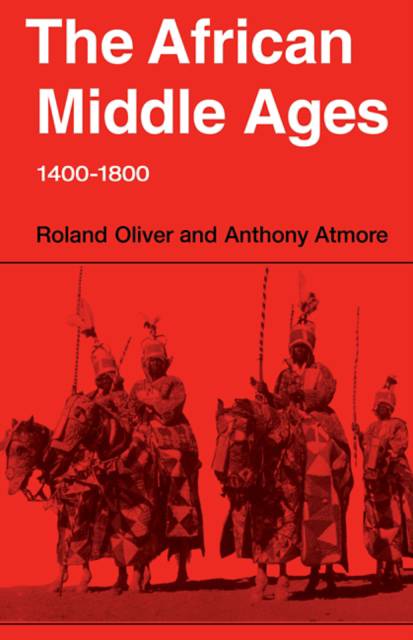
The African Middle Ages covers the period of African history from 1400 to 1800. During this period Africa was influenced by external forces as the Islamic states of the north extended their sway and as maritime trade with Europe and Asia increased. The notorious slave-trade created the black population of North and South America, the Caribbean and the Indian Ocean islands. The authors, however, emphasize the extent to which Africans dealt with outsiders on equal terms. The peoples of Africa were coalescing into tribal states rather like those of early medieval Europe. These states were often capable of providing a high degree of law and order, of exploiting resources and organising trade; of redistributing the products of local industries, and of defending themselves against outside attack. Though eventually subordinated by the colonial conquests of the late nineteenth and early twentieth centuries, the tribal states of pre-colonial Africa continue to exert a powerful residual influence upon the post-colonial states of modern Africa.
Specificaties
Betrokkenen
- Auteur(s):
- Uitgeverij:
Inhoud
- Aantal bladzijden:
- 228
- Taal:
- Engels
Eigenschappen
- Productcode (EAN):
- 9780521298940
- Verschijningsdatum:
- 31/03/1981
- Uitvoering:
- Paperback
- Formaat:
- Trade paperback (VS)
- Afmetingen:
- 138 mm x 214 mm
- Gewicht:
- 267 g


Alleen bij Standaard Boekhandel
+ 135 punten op je klantenkaart van Standaard Boekhandel
CADEAU

AANGERADEN


Beoordelingen
We publiceren alleen reviews die voldoen aan de voorwaarden voor reviews. Bekijk onze voorwaarden voor reviews.