


- Afhalen na 1 uur in een winkel met voorraad
- Gratis thuislevering in België vanaf € 30
- Ruim aanbod met 7 miljoen producten
- Afhalen na 1 uur in een winkel met voorraad
- Gratis thuislevering in België vanaf € 30
- Ruim aanbod met 7 miljoen producten





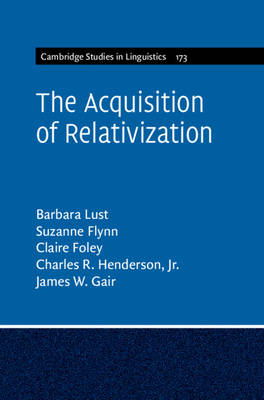
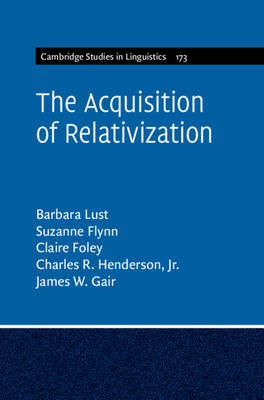
The Acquisition of Relativization
Barbara Lust, Suzanne Flynn, Claire Foley, Charles R Henderson Jr, James W Gair
€ 201,95
+ 403 punten
Omschrijving
How does a biologically-programmed language faculty interact with language experience in the acquisition of language across the world? Bringing together linguistic theory, language typology, and cross-linguistic experimental results from parallel studies of development in language acquisition, this book reports new research on the nature of the human competence for language acquisition. It investigates the acquisition of complex sentence formation through relativization -a fundamental component of language knowledge- through systematic, formally explicit, hypothesis-driven experimental studies from English, French and Tulu (in the US, Belgium and India). It demonstrates that across languages, the course of acquisition shares basic properties in keeping with universals of a language faculty, while at the same time, in all languages, specific relativization forms are achieved through development. The results show the power of an approach to the study of language acquisition which bridges linguistic theory of Universal Grammar with real-time creation of a specific language by the child.
Specificaties
Betrokkenen
- Auteur(s):
- Uitgeverij:
Inhoud
- Aantal bladzijden:
- 221
- Taal:
- Engels
- Reeks:
- Reeksnummer:
- nr. 173
Eigenschappen
- Productcode (EAN):
- 9781009373715
- Verschijningsdatum:
- 19/02/2026
- Uitvoering:
- Hardcover
- Formaat:
- Genaaid
- Afmetingen:
- 152 mm x 229 mm
- Gewicht:
- 467 g


Alleen bij Standaard Boekhandel
+ 403 punten op je klantenkaart van Standaard Boekhandel
Cadeau

AANGERADEN


Beoordelingen
We publiceren alleen reviews die voldoen aan de voorwaarden voor reviews. Bekijk onze voorwaarden voor reviews.