


- Afhalen na 1 uur in een winkel met voorraad
- Gratis thuislevering in België vanaf € 30
- Ruim aanbod met 7 miljoen producten
- Afhalen na 1 uur in een winkel met voorraad
- Gratis thuislevering in België vanaf € 30
- Ruim aanbod met 7 miljoen producten





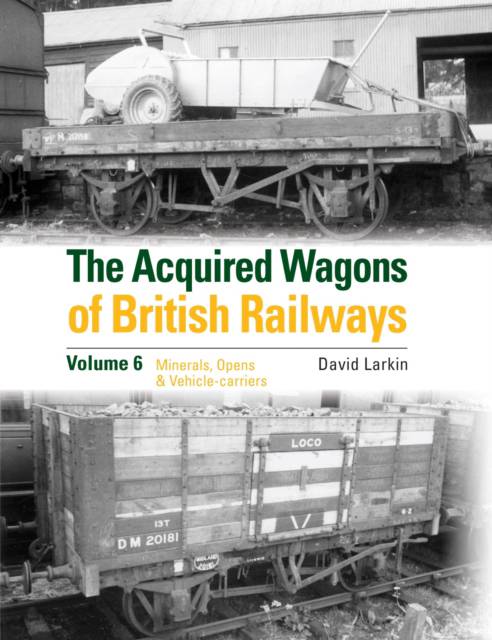
The Acquired Wagons of British Railways Volume 6
Minerals, Opens & Vehicle-Carriers
David Larkin
Hardcover | Engels
€ 42,45
+ 84 punten
Omschrijving
British Railways was created in 1948 when the Great Western, the London, Midland & Scottish, the London & North Eastern and the Southern were taken into public ownership. BR inherited all their locomotives, passenger and goods rolling stock. Whilst much has been published on BR locomotives and passenger stock, less readily available is accurate and detailed coverage of the large inventory of vehicles used to convey the huge volumes of goods traffic carried by the railways at that time. The 'Acquired Wagons' series sets out to redress the balance and provide that information. Written by David Larkin, one of the acknowledged experts on British railway wagons, each volume is heavily illustrated throughout.
The sixth volume in the series examines a varied and interesting range of wagons, many of which were designed and dedicated to quite specific traffic flows. These include the pre-1923 Minerals and large wooden/steel designs including those designed for the carriage of coke and 7 and 8-plank open wagons for general merchandise loads. Also included in this volume is a group of wagons which could be loaded with vehicles or other similar loads. This included the Lowfit types, together with the associated 4- wheeled car-carrying wagons and the heavier-duty designs, such as the Lowmac, the Hymac, the Rectank and the Warwell. This volume concludes with coverage of a diverse group of open wagons for specialist loads such as bricks, glass, roadstone, sand, sleepers, soda ash and sulphates.
The sixth volume in the series examines a varied and interesting range of wagons, many of which were designed and dedicated to quite specific traffic flows. These include the pre-1923 Minerals and large wooden/steel designs including those designed for the carriage of coke and 7 and 8-plank open wagons for general merchandise loads. Also included in this volume is a group of wagons which could be loaded with vehicles or other similar loads. This included the Lowfit types, together with the associated 4- wheeled car-carrying wagons and the heavier-duty designs, such as the Lowmac, the Hymac, the Rectank and the Warwell. This volume concludes with coverage of a diverse group of open wagons for specialist loads such as bricks, glass, roadstone, sand, sleepers, soda ash and sulphates.
Specificaties
Betrokkenen
- Auteur(s):
- Uitgeverij:
Inhoud
- Aantal bladzijden:
- 144
- Taal:
- Engels
Eigenschappen
- Productcode (EAN):
- 9781800353077
- Verschijningsdatum:
- 30/06/2024
- Uitvoering:
- Hardcover
- Formaat:
- Genaaid
- Afmetingen:
- 210 mm x 280 mm
- Gewicht:
- 786 g


Alleen bij Standaard Boekhandel
+ 84 punten op je klantenkaart van Standaard Boekhandel
Cadeau

AANGERADEN


Beoordelingen
We publiceren alleen reviews die voldoen aan de voorwaarden voor reviews. Bekijk onze voorwaarden voor reviews.