


- Afhalen na 1 uur in een winkel met voorraad
- Gratis thuislevering in België vanaf € 30
- Ruim aanbod met 7 miljoen producten
- Afhalen na 1 uur in een winkel met voorraad
- Gratis thuislevering in België vanaf € 30
- Ruim aanbod met 7 miljoen producten





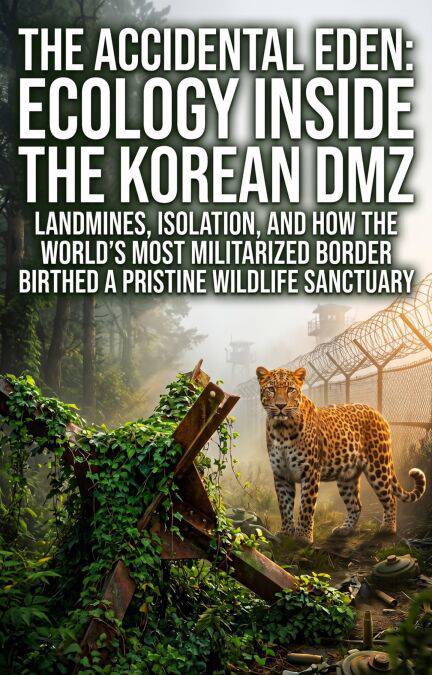
The Accidental Eden: Ecology Inside the Korean DMZ E-BOOK
Landmines, Isolation, and How the World's Most Militarized Border Birthed a Pristine Wildlife Sanctuary
Jacqueline Johnson
E-book | Engels
€ 4,99
+ 4 punten
Omschrijving
How did a 160-mile-long, heavily fortified strip of land, completely littered with millions of active landmines and flanked by massive standing armies, accidentally become one of the most pristine and vital ecological sanctuaries in all of Asia? The Demilitarized Zone (DMZ) between North and South Korea is a breathtaking paradox of human conflict and biological resilience.
Following the armistice in 1953, a two-and-a-half-mile-wide buffer zone was established, completely halting all human habitation, agriculture, and industrial development. Left entirely undisturbed for over seven decades, nature violently reclaimed the scarred landscape. Today, the DMZ is a thriving, accidental Eden. It serves as a crucial refuge for thousands of endangered species that have been entirely eradicated from the rest of the peninsula, including the elusive Amur leopard, Asiatic black bears, and the red-crowned crane, all living peacefully among the rusted tank traps and minefields.
This captivating environmental history explores the incredible regenerative power of the natural world. It documents the tense cross-border conservation efforts, the unique evolution of the local flora, and the complicated debate over what to do with the sanctuary if the peninsula ever reunites.
Witness the ultimate triumph of nature over war. The DMZ proves that the most effective way to protect a fragile ecosystem is to make it utterly terrifying for humans to enter.
Following the armistice in 1953, a two-and-a-half-mile-wide buffer zone was established, completely halting all human habitation, agriculture, and industrial development. Left entirely undisturbed for over seven decades, nature violently reclaimed the scarred landscape. Today, the DMZ is a thriving, accidental Eden. It serves as a crucial refuge for thousands of endangered species that have been entirely eradicated from the rest of the peninsula, including the elusive Amur leopard, Asiatic black bears, and the red-crowned crane, all living peacefully among the rusted tank traps and minefields.
This captivating environmental history explores the incredible regenerative power of the natural world. It documents the tense cross-border conservation efforts, the unique evolution of the local flora, and the complicated debate over what to do with the sanctuary if the peninsula ever reunites.
Witness the ultimate triumph of nature over war. The DMZ proves that the most effective way to protect a fragile ecosystem is to make it utterly terrifying for humans to enter.
Specificaties
Betrokkenen
- Auteur(s):
- Uitgeverij:
Inhoud
- Aantal bladzijden:
- 141
- Taal:
- Engels
Eigenschappen
- Productcode (EAN):
- 9783565466504
- Verschijningsdatum:
- 28/05/2026
- Uitvoering:
- E-book
- Formaat:
- ePub



Alleen bij Standaard Boekhandel
+ 4 punten op je klantenkaart van Standaard Boekhandel
Cadeau

AANGERADEN


Beoordelingen
We publiceren alleen reviews die voldoen aan de voorwaarden voor reviews. Bekijk onze voorwaarden voor reviews.