


- Afhalen na 1 uur in een winkel met voorraad
- Gratis thuislevering in België vanaf € 30
- Ruim aanbod met 7 miljoen producten
- Afhalen na 1 uur in een winkel met voorraad
- Gratis thuislevering in België vanaf € 30
- Ruim aanbod met 7 miljoen producten





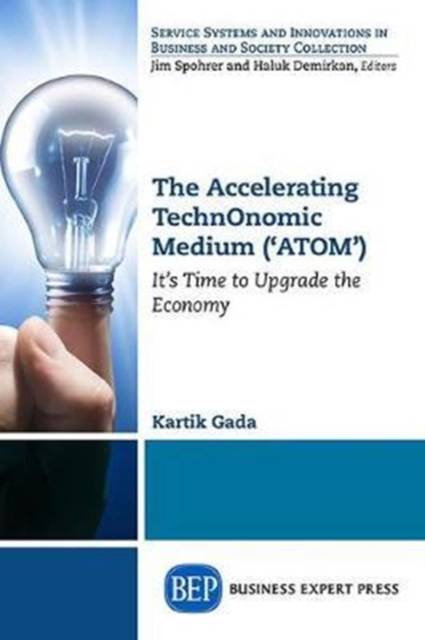
The Accelerating TechnOnomic Medium ('ATOM')
It's Time to Upgrade the Economy
Kartik Gada
Paperback | Engels
€ 30,95
+ 61 punten
Omschrijving
The accelerating pace and diffusion of technological change has taken control of an ever-growing fraction of the world economy. This fraction is being assimilated into a different set of economic fundamentals, such as the rapid and exponential price deflation inherent to technology. The effect of this was insignificant until recently, but is now beginning to create conspicuous distortions in many economic metrics, and is just years from being the dominant force across the entire economy. In response to technological deflation, the central banks of the world will have to create new money in perpetuity, increasing the stream at an exponentially rising rate much higher than is currently assumed. This now-permanent need for monetary expansion, if embraced, can fund government spending more directly. This in turn creates a very robust, dynamic, and efficient safety net for citizens, while simultaneously reducing and even eliminating most forms of taxation by 2025. Failure to recognize that technological deflation mandates permanent and ever-rising central bank monetary expansion that can and should gradually become the primary source of government spending will precipitate a major financial crisis starting as soon as 2017.
Specificaties
Betrokkenen
- Auteur(s):
- Uitgeverij:
Inhoud
- Aantal bladzijden:
- 149
- Taal:
- Engels
Eigenschappen
- Productcode (EAN):
- 9781631578663
- Verschijningsdatum:
- 8/06/2017
- Uitvoering:
- Paperback
- Formaat:
- Trade paperback (VS)
- Afmetingen:
- 152 mm x 229 mm
- Gewicht:
- 226 g


Alleen bij Standaard Boekhandel
+ 61 punten op je klantenkaart van Standaard Boekhandel

Beoordelingen
We publiceren alleen reviews die voldoen aan de voorwaarden voor reviews. Bekijk onze voorwaarden voor reviews.