


- Afhalen na 1 uur in een winkel met voorraad
- Gratis thuislevering in België vanaf € 30
- Ruim aanbod met 7 miljoen producten
- Afhalen na 1 uur in een winkel met voorraad
- Gratis thuislevering in België vanaf € 30
- Ruim aanbod met 7 miljoen producten




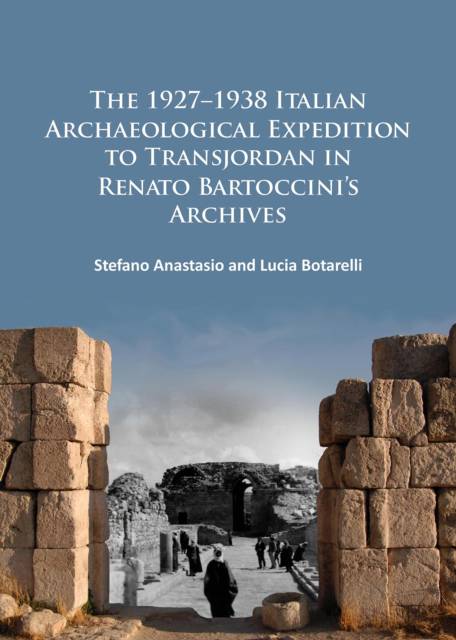
The 1927-1938 Italian Archaeological Expedition to Transjordan in Renato Bartoccini's Archives
Stefano Anastasio, Lucia Botarelli
Paperback | Engels
€ 54,45
+ 108 punten
Omschrijving
This volume presents the results of the Italian excavations and surveys carried out in Transjordan between 1927 and 1938. After a first excavation campaign conducted in 1927 on the Amman Citadel by Giacomo Guidi, the excavations were resumed in 1929 by Renato Bartoccini (Rome 1893-Rome 1963), who carried out four campaigns on the Citadel in 1929, 1930, 1933 and 1938. He also travelled across modern Jordan, Syria and Lebanon, taking photos and writing reports on several archaeological sites. Bartoccini published a few notes and reports, but almost all the original documentation of his work was still unpublished at the time this study was conducted. The main source of data is the Fondo Renato Bartoccini, i.e. the private archive of Bartoccini, today held by the University of Perugia, while other useful documents are kept in other archives in Macerata and in Rome. Furthermore, some decorated Islamic pottery from the excavations on the Citadel is held at the Museo Internazionale delle Ceramiche in Faenza. The retrieved photos, excavation journals, letters, and administrative documents make it possible to understand, after almost a century, how the Citadel of Amman appeared at the time of its first excavation.
Specificaties
Betrokkenen
- Auteur(s):
- Uitgeverij:
Inhoud
- Aantal bladzijden:
- 243
- Taal:
- Engels
Eigenschappen
- Productcode (EAN):
- 9781784911188
- Verschijningsdatum:
- 30/04/2015
- Uitvoering:
- Paperback
- Formaat:
- Trade paperback (VS)
- Afmetingen:
- 210 mm x 296 mm
- Gewicht:
- 924 g



Alleen bij Standaard Boekhandel
+ 108 punten op je klantenkaart van Standaard Boekhandel
AANGERADEN


Beoordelingen
We publiceren alleen reviews die voldoen aan de voorwaarden voor reviews. Bekijk onze voorwaarden voor reviews.