


- Afhalen na 1 uur in een winkel met voorraad
- Gratis thuislevering in België vanaf € 30
- Ruim aanbod met 7 miljoen producten
- Afhalen na 1 uur in een winkel met voorraad
- Gratis thuislevering in België vanaf € 30
- Ruim aanbod met 7 miljoen producten




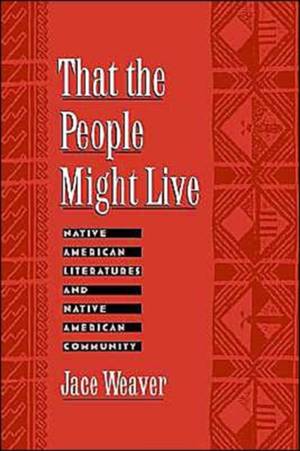
That the People Might Live
Native American Literatures and Native American Community
Jace Weaver
Paperback | Engels
€ 133,95
+ 267 punten
Omschrijving
Loyalty to the community is the highest value in Native American cultures, argues Jace Weaver. In That the People Might Live, he explores a wide range of Native American literature from 1768 to the present, taking this sense of community as both a starting point and a lens.
Weaver considers some of the best known Native American writers, such as Leslie Marmon Silko, Gerald Vizenor, and Vine Deloria, as well as many others who are receiving critical attention here for the first time. He contends that the single thing that most defines these authors' writings, and makes them deserving of study as a literature separate from the national literature of the United States, is their commitment to Native community and its survival. He terms this commitment "communitism"--a fusion of "community" and "activism." The Native American authors are engaged in an ongoing quest for community and write out of a passionate commitment to it. They write, literally, "that the People might live."
Drawing upon the best Native and non-Native scholarship (including the emerging postcolonial discourse), as well as a close reading of the writings themselves, Weaver adds his own provocative insights to help readers to a richer understanding of these too often neglected texts. A scholar of religion, he also sets this literature in the context of Native cultures and religious traditions, and explores the tensions between these traditions and Christianity.
Weaver considers some of the best known Native American writers, such as Leslie Marmon Silko, Gerald Vizenor, and Vine Deloria, as well as many others who are receiving critical attention here for the first time. He contends that the single thing that most defines these authors' writings, and makes them deserving of study as a literature separate from the national literature of the United States, is their commitment to Native community and its survival. He terms this commitment "communitism"--a fusion of "community" and "activism." The Native American authors are engaged in an ongoing quest for community and write out of a passionate commitment to it. They write, literally, "that the People might live."
Drawing upon the best Native and non-Native scholarship (including the emerging postcolonial discourse), as well as a close reading of the writings themselves, Weaver adds his own provocative insights to help readers to a richer understanding of these too often neglected texts. A scholar of religion, he also sets this literature in the context of Native cultures and religious traditions, and explores the tensions between these traditions and Christianity.
Specificaties
Betrokkenen
- Auteur(s):
- Uitgeverij:
Inhoud
- Aantal bladzijden:
- 256
- Taal:
- Engels
Eigenschappen
- Productcode (EAN):
- 9780195120370
- Verschijningsdatum:
- 18/12/1997
- Uitvoering:
- Paperback
- Formaat:
- Trade paperback (VS)
- Afmetingen:
- 154 mm x 231 mm
- Gewicht:
- 394 g


Alleen bij Standaard Boekhandel
+ 267 punten op je klantenkaart van Standaard Boekhandel
Cadeau

AANGERADEN


Beoordelingen
We publiceren alleen reviews die voldoen aan de voorwaarden voor reviews. Bekijk onze voorwaarden voor reviews.