



- Afhalen na 1 uur in een winkel met voorraad
- In januari gratis thuislevering in België
- Ruim aanbod met 7 miljoen producten
- Afhalen na 1 uur in een winkel met voorraad
- In januari gratis thuislevering in België
- Ruim aanbod met 7 miljoen producten





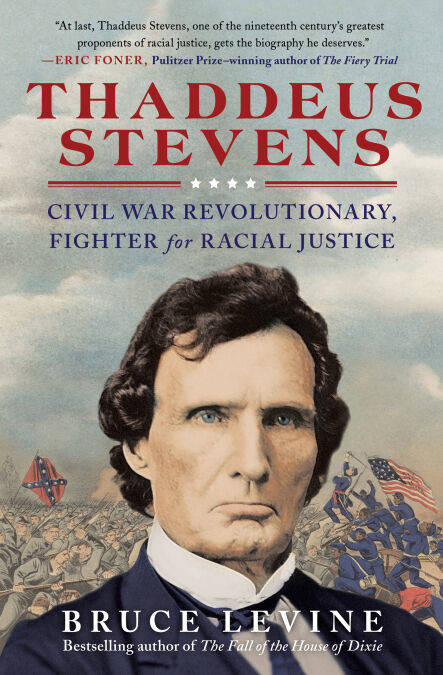
Thaddeus Stevens E-BOOK
Civil War Revolutionary, Fighter for Racial Justice
Bruce Levine
E-book | Engels
€ 2,23
+ 2 punten
Uitvoering
Omschrijving
A “powerful” (The Wall Street Journal) biography of Thaddeus Stevens—one of the 19th century’s greatest statesmen—encompassing his decades-long fight against slavery and his postwar struggle to bring racial justice to America.
Thaddeus Stevens was among the first to see the Civil War as an opportunity for a second American revolution—a chance to remake the country as a genuine multiracial democracy. As one of the foremost abolitionists in Congress in the years leading up to the war, he was a leader of the young Republican Party’s radical wing, fighting for anti-slavery and anti-racist policies long before party colleagues like Abraham Lincoln endorsed them. These policies—including welcoming black men into the Union’s armies—would prove crucial to the Union war effort.
During the Reconstruction era that followed, Stevens demanded equal civil and political rights for Black Americans—rights eventually embodied in the 14th and 15th amendments. But while Stevens in many ways pushed his party—and America—towards equality, he also championed ideas too radical for his fellow Congressmen ever to support, such as confiscating large slaveholders’ estates and dividing the land among those who had been enslaved.
In Thaddeus Stevens, acclaimed historian Bruce Levine has written a “vital” (The Guardian) and “compelling” (James McPherson) biography of one of the most visionary statesmen of the 19th century and a forgotten champion for racial justice in America.
Thaddeus Stevens was among the first to see the Civil War as an opportunity for a second American revolution—a chance to remake the country as a genuine multiracial democracy. As one of the foremost abolitionists in Congress in the years leading up to the war, he was a leader of the young Republican Party’s radical wing, fighting for anti-slavery and anti-racist policies long before party colleagues like Abraham Lincoln endorsed them. These policies—including welcoming black men into the Union’s armies—would prove crucial to the Union war effort.
During the Reconstruction era that followed, Stevens demanded equal civil and political rights for Black Americans—rights eventually embodied in the 14th and 15th amendments. But while Stevens in many ways pushed his party—and America—towards equality, he also championed ideas too radical for his fellow Congressmen ever to support, such as confiscating large slaveholders’ estates and dividing the land among those who had been enslaved.
In Thaddeus Stevens, acclaimed historian Bruce Levine has written a “vital” (The Guardian) and “compelling” (James McPherson) biography of one of the most visionary statesmen of the 19th century and a forgotten champion for racial justice in America.
Specificaties
Betrokkenen
- Auteur(s):
- Uitgeverij:
Inhoud
- Aantal bladzijden:
- 320
- Taal:
- Engels
Eigenschappen
- Productcode (EAN):
- 9781476793399
- Verschijningsdatum:
- 1/03/2021
- Uitvoering:
- E-book
- Beveiligd met:
- Adobe DRM
- Formaat:
- ePub


Alleen bij Standaard Boekhandel
+ 2 punten op je klantenkaart van Standaard Boekhandel
Cadeau

AANGERADEN


Beoordelingen
We publiceren alleen reviews die voldoen aan de voorwaarden voor reviews. Bekijk onze voorwaarden voor reviews.