


- Afhalen na 1 uur in een winkel met voorraad
- Gratis thuislevering in België vanaf € 30
- Ruim aanbod met 7 miljoen producten
- Afhalen na 1 uur in een winkel met voorraad
- Gratis thuislevering in België vanaf € 30
- Ruim aanbod met 7 miljoen producten





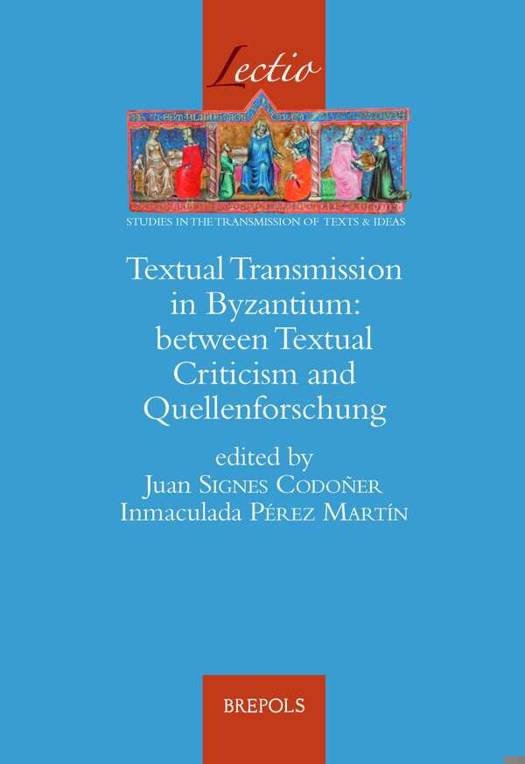
Textual Transmission in Byzantium
Between Textual Criticism and Quellenforschung
Juan Signes Codoñer
€ 143,10
+ 286 punten
Omschrijving
A workshop was held in February 2012 in Madrid to stimulate a debate on textual criticism centred on the analysis of Byzantine texts and their modes of publication, rewriting and diffusion. The main aim was to provide future editors or scholars of the history of texts with a rich typology of concepts to guide their task, such as interpolation, paraphrasis, metaphrasis, quotation, collection, amplification or falsification, among others, but always taking into account that the principles upon which the discipline of textual criticism was founded needed to be reconsidered when dealing with the transmission of Byzantine texts. The present book brings together the different case studies produced by the participants of the workshop into a coherent whole and distributes them into five different sections according to their methodological approaches: 1. Language and style; 2. Virtual libraries and crossed readings; 3. Philosophical treatises and collections; 3.The sources of history; 5. Law texts and their reception. The results of the different approaches put forward by the contributors offer a broad palette of methodological strategies that are, to a great extent, complementary, and will, so we hope, illuminate the task of the future editors with new reflections.
Specificaties
Betrokkenen
- Auteur(s):
- Uitgeverij:
Inhoud
- Aantal bladzijden:
- 580
- Taal:
- Frans
- Reeks:
- Reeksnummer:
- nr. 2
Eigenschappen
- Productcode (EAN):
- 9782503552699
- Verschijningsdatum:
- 22/10/2014
- Uitvoering:
- Hardcover
- Formaat:
- Genaaid
- Afmetingen:
- 163 mm x 239 mm
- Gewicht:
- 1111 g


Alleen bij Standaard Boekhandel
+ 286 punten op je klantenkaart van Standaard Boekhandel
Cadeau

AANGERADEN


Beoordelingen
We publiceren alleen reviews die voldoen aan de voorwaarden voor reviews. Bekijk onze voorwaarden voor reviews.