


- Afhalen na 1 uur in een winkel met voorraad
- Gratis thuislevering in België vanaf € 30
- Ruim aanbod met 7 miljoen producten
- Afhalen na 1 uur in een winkel met voorraad
- Gratis thuislevering in België vanaf € 30
- Ruim aanbod met 7 miljoen producten





Omschrijving
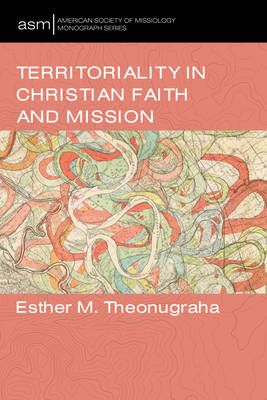
The idea of Christendom continues to captivate Christian authors seeking to understand how today's experience differs from that of earlier generations. Within this discussion, influential scholars Andrew Walls and Lamin Sanneh have asserted that the end of Christendom means the end of Christian territoriality. Yet territoriality is an enduring part of human spatial behavior. Engaging Robert Sack's geographic theory alongside Christian history, this work critically evaluates whether Christianity has, in fact, become nonterritorial. Through analysis of early Christianity, Christendom, and mission practice, this book reveals how territorial habits continue to shape Christian life, sometimes subtly and sometimes overtly. Rather than dismissing Walls and Sanneh, it reframes and extends their insights, showing how geography can deepen our understanding of Christian mission today. This study provides readers with conceptual tools to recognize territoriality, assess its effects, and navigate the tension between rootedness in place and the global scope of God's mission.
Specificaties
Betrokkenen
- Auteur(s):
- Uitgeverij:
Inhoud
- Aantal bladzijden:
- 290
- Taal:
- Engels
- Reeks:
- Reeksnummer:
- nr. 77
Eigenschappen
- Productcode (EAN):
- 9798385256556
- Verschijningsdatum:
- 23/03/2026
- Uitvoering:
- Hardcover
- Formaat:
- Genaaid
- Afmetingen:
- 152 mm x 229 mm
- Gewicht:
- 566 g


Alleen bij Standaard Boekhandel
+ 146 punten op je klantenkaart van Standaard Boekhandel
CADEAU

AANGERADEN


Beoordelingen
We publiceren alleen reviews die voldoen aan de voorwaarden voor reviews. Bekijk onze voorwaarden voor reviews.