


- Afhalen na 1 uur in een winkel met voorraad
- Gratis thuislevering in België vanaf € 30
- Ruim aanbod met 7 miljoen producten
- Afhalen na 1 uur in een winkel met voorraad
- Gratis thuislevering in België vanaf € 30
- Ruim aanbod met 7 miljoen producten





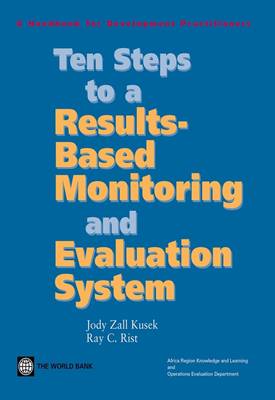
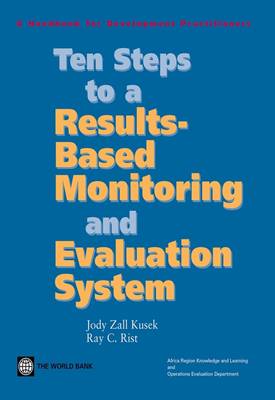
Ten Steps to a Results Based Monitoring and Evaluation System
A Handbook for Development Practitioners
Jody Zall Kusek, Ray C Rist
Paperback | Engels
€ 80,45
+ 160 punten
Omschrijving
An effective state is essential to achieving socio-economic and sustainable development. With the advent of globalization, there are growing pressures on governments and organizations around the world to be more responsive to the demands of internal and external stakeholders for good governance, accountability and transparency, greater development effectiveness, and delivery of tangible results. Governments, parliaments, citizens, the private sector, NGOs, civil society, international organizations and donors are among the stakeholders interested in better performance. As demands for greater accountability and real results have increased, there is an attendant need for enhanced results-based monitoring and evaluation of policies, programs, and projects.
This Handbook provides a comprehensive ten-step model that will help guide development practitioners through the process of designing and building a results-based monitoring and evaluation system. These steps begin with a 'Readiness Assessment' and take the practitioner through the design, management, and more importantly, the sustainability of such systems. 'Ten Steps to a Results-Based Monitoring and Evaluation System' describes each step in detail, the tasks needed to complete each one, and the tools available to help along the way.
Specificaties
Betrokkenen
- Auteur(s):
- Uitgeverij:
Inhoud
- Aantal bladzijden:
- 264
- Taal:
- Engels
Eigenschappen
- Productcode (EAN):
- 9780821358238
- Verschijningsdatum:
- 15/06/2004
- Uitvoering:
- Paperback
- Formaat:
- Trade paperback (VS)
- Afmetingen:
- 186 mm x 236 mm
- Gewicht:
- 553 g


Alleen bij Standaard Boekhandel
+ 160 punten op je klantenkaart van Standaard Boekhandel
Cadeau

AANGERADEN


Beoordelingen
We publiceren alleen reviews die voldoen aan de voorwaarden voor reviews. Bekijk onze voorwaarden voor reviews.