


- Afhalen na 1 uur in een winkel met voorraad
- Gratis thuislevering in België vanaf € 30
- Ruim aanbod met 7 miljoen producten
- Afhalen na 1 uur in een winkel met voorraad
- Gratis thuislevering in België vanaf € 30
- Ruim aanbod met 7 miljoen producten





Omschrijving
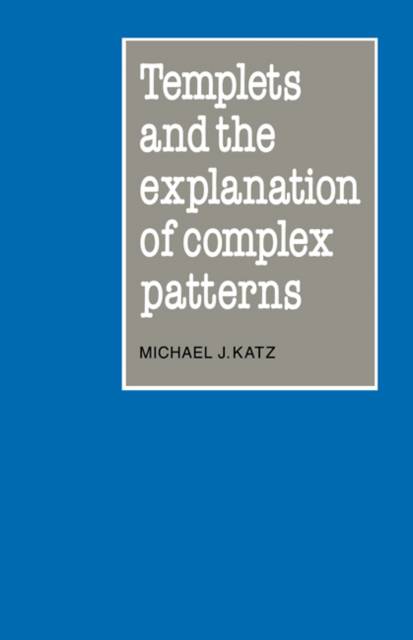
Where does the particular form or configuration of a pattern come from, and how is it propagated from pattern to pattern? Templets and the Explanation of Complex Patterns provides a natural language for analysing such questions. Using it, the organisational forces that underlie the fabrication of any pattern can be divided into two classes. First, there are the 'universal laws' of pattern assembly, the configurational rules and constraints inherent within the fabric of the pattern elements themselves. Second, there are the 'templets' - external, situational constraints imposed on the pattern elements. From the perspective of templeting, simple patterns can be directly contrasted with complex patterns: the former are completely determined by their universal laws, whereas the latter also require extensive templets. Natural patterns range along the entire spectrum from simple to complex, and the most complex of these include both random patterns and many biological patterns.
Specificaties
Betrokkenen
- Auteur(s):
- Uitgeverij:
Inhoud
- Aantal bladzijden:
- 140
- Taal:
- Engels
Eigenschappen
- Productcode (EAN):
- 9780521096027
- Verschijningsdatum:
- 11/01/2009
- Uitvoering:
- Paperback
- Formaat:
- Trade paperback (VS)
- Afmetingen:
- 140 mm x 216 mm
- Gewicht:
- 185 g


Alleen bij Standaard Boekhandel
Cadeau

AANGERADEN


Beoordelingen
We publiceren alleen reviews die voldoen aan de voorwaarden voor reviews. Bekijk onze voorwaarden voor reviews.