


- Afhalen na 1 uur in een winkel met voorraad
- Gratis thuislevering in België vanaf € 30
- Ruim aanbod met 7 miljoen producten
- Afhalen na 1 uur in een winkel met voorraad
- Gratis thuislevering in België vanaf € 30
- Ruim aanbod met 7 miljoen producten





€ 50,95
+ 101 punten
Omschrijving
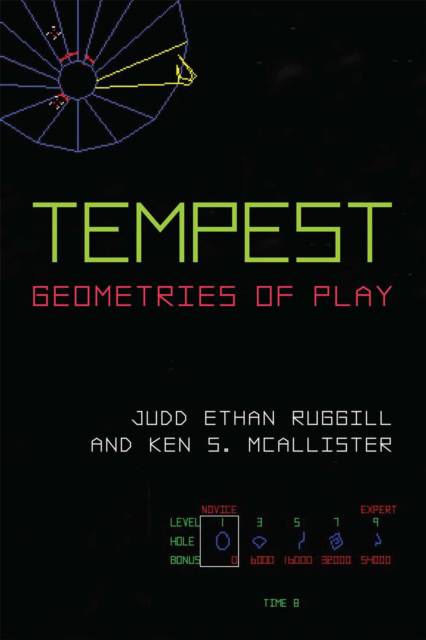
Atari's 1981 arcade hit Tempest was a "tube shooter" built around glowing, vector-based geometric shapes. Among its many important contributions to both game and cultural history, Tempest was one of the first commercial titles to allow players to choose the game's initial play difficulty (a system Atari dubbed "SkillStep"), a feature that has since became standard for games of all types. Tempest was also one of the most aesthetically impactful games of the twentieth century, lending its crisp, vector aesthetic to many subsequent movies, television shows, and video games. In this book, Ruggill and McAllister enumerate and analyze Tempest's landmark qualities, exploring the game's aesthetics, development context, and connections to and impact on video game history and culture. By describing the game in technical, historical, and ludic detail, they unpack the game's latent and manifest audio-visual iconography and the ideological meanings this iconography evokes.
Specificaties
Betrokkenen
- Auteur(s):
- Uitgeverij:
Inhoud
- Aantal bladzijden:
- 168
- Taal:
- Engels
- Reeks:
Eigenschappen
- Productcode (EAN):
- 9780472052691
- Verschijningsdatum:
- 27/08/2015
- Uitvoering:
- Paperback
- Formaat:
- Trade paperback (VS)
- Afmetingen:
- 150 mm x 226 mm
- Gewicht:
- 272 g


Alleen bij Standaard Boekhandel
+ 101 punten op je klantenkaart van Standaard Boekhandel
Cadeau

AANGERADEN


Beoordelingen
We publiceren alleen reviews die voldoen aan de voorwaarden voor reviews. Bekijk onze voorwaarden voor reviews.