


- Afhalen na 1 uur in een winkel met voorraad
- Gratis thuislevering in België vanaf € 30
- Ruim aanbod met 7 miljoen producten
- Afhalen na 1 uur in een winkel met voorraad
- Gratis thuislevering in België vanaf € 30
- Ruim aanbod met 7 miljoen producten





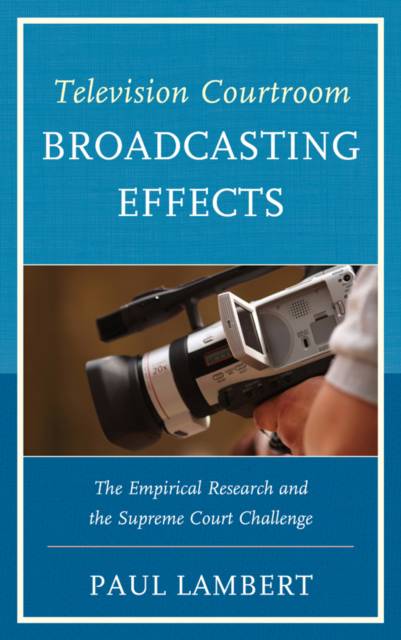
Television Courtroom Broadcasting Effects
The Empirical Research and the Supreme Court Challenge
Paul Lambert
Paperback | Engels
€ 127,45
+ 254 punten
Uitvoering
Omschrijving
Court and policy makers have increasingly had to deal with--and sometimes even embrace--technology, from podcasts to the Internet. Televised courtroom broadcasting especially remains an issue. The debate surrounding the US Supreme Court and federal courts, as well as the great disparity between different forms of television courtroom broadcasting, rages on. What are the effects of television courtroom broadcasting? Does research support the arguments for or against? Despite three Supreme Court cases on television courtroom broadcasting, the common thread between the cases has not been highlighted. The Supreme Court in these cases maintains a common theme: there is not a sufficient body of research on the effects of televising courtroom proceedings to resolve the debate in a confident manner.
Specificaties
Betrokkenen
- Auteur(s):
- Uitgeverij:
Inhoud
- Aantal bladzijden:
- 494
- Taal:
- Engels
Eigenschappen
- Productcode (EAN):
- 9780761865582
- Verschijningsdatum:
- 1/04/2015
- Uitvoering:
- Paperback
- Formaat:
- Trade paperback (VS)
- Afmetingen:
- 152 mm x 229 mm
- Gewicht:
- 725 g


Alleen bij Standaard Boekhandel
+ 254 punten op je klantenkaart van Standaard Boekhandel
Cadeau

AANGERADEN


Beoordelingen
We publiceren alleen reviews die voldoen aan de voorwaarden voor reviews. Bekijk onze voorwaarden voor reviews.