


- Afhalen na 1 uur in een winkel met voorraad
- Gratis thuislevering in België vanaf € 30
- Ruim aanbod met 7 miljoen producten
- Afhalen na 1 uur in een winkel met voorraad
- Gratis thuislevering in België vanaf € 30
- Ruim aanbod met 7 miljoen producten





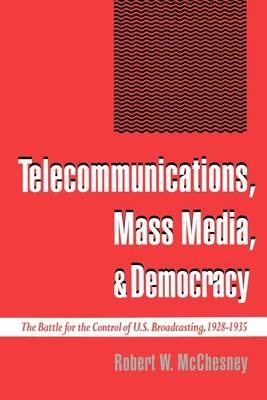
Telecommunications, Mass Media, and Democracy
The Battle for the Control of U.S. Broadcasting, 1928-1935
Robert W McChesney
Paperback | Engels
€ 122,45
+ 244 punten
Eenvoudig bestellen
Veilig betalen


Gratis thuislevering vanaf € 30 (via bpost)
Gratis levering in je Standaard Boekhandel
Omschrijving
This work shows in detail the emergence and consolidation of U.S. commercial broadcasting economically, politically, and ideologically. This process was met by organized opposition and a general level of public antipathy that has been almost entirely overlooked by previous scholarship. McChesney highlights the activities and arguments of this early broadcast reform movement of the 1930s. The reformers argued that commercial broadcasting was inimical to the communication requirements of a democratic society and that the only solution was to have a dominant role for nonprofit and noncommercial broadcasting. Although the movement failed, McChesney argues that it provides important lessons not only for communication historians and policymakers, but for those concerned with media and how they are used.
Specificaties
Betrokkenen
- Auteur(s):
- Uitgeverij:
Inhoud
- Aantal bladzijden:
- 416
- Taal:
- Engels
Eigenschappen
- Productcode (EAN):
- 9780195093940
- Verschijningsdatum:
- 26/01/1995
- Uitvoering:
- Paperback
- Formaat:
- Trade paperback (VS)
- Afmetingen:
- 157 mm x 235 mm
- Gewicht:
- 698 g


Alleen bij Standaard Boekhandel
+ 244 punten op je klantenkaart van Standaard Boekhandel
CADEAU

AANGERADEN


Beoordelingen
We publiceren alleen reviews die voldoen aan de voorwaarden voor reviews. Bekijk onze voorwaarden voor reviews.