


- Afhalen na 1 uur in een winkel met voorraad
- Gratis thuislevering in België vanaf € 30
- Ruim aanbod met 7 miljoen producten
- Afhalen na 1 uur in een winkel met voorraad
- Gratis thuislevering in België vanaf € 30
- Ruim aanbod met 7 miljoen producten





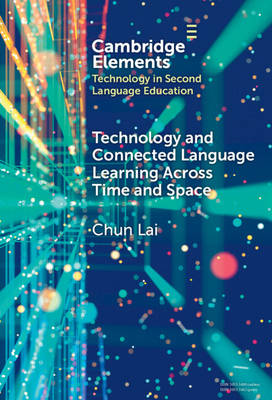
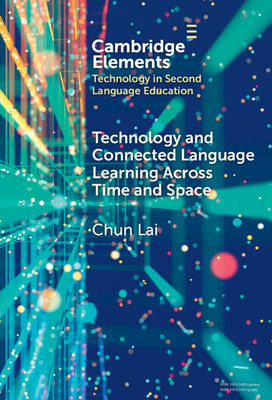
Technology and Connected Language Learning Across Time and Space
Chun Lai
€ 79,45
+ 158 punten
Omschrijving
Language is integral to human doing, being, becoming and belonging, and its acquisition is naturally distributed in and across activity spaces over time. Different learning experiences form 'a dialectical unity', where one brings the others into existence, and the capacities fostered in one inform and transform those in the others. Thus, connected learning across time and space is fundamental to the coherence, relevance, and meaningfulness of language learning, yet is not given sufficient attention in second language education. Connected learning is particularly relevant in the GenAI era where learner-driven lifelong and lifewide learning is much emphasized. This Element hence conceptualizes the framework of connected language learning with technology, and discusses how the framework could be operationalized and implemented in teaching and learning. It further foregrounds four concepts in this learning framework - agential literacy, interest development, self-regulation support, and identity intervention - and charts out an agenda for research.
Specificaties
Betrokkenen
- Auteur(s):
- Uitgeverij:
Inhoud
- Aantal bladzijden:
- 75
- Taal:
- Engels
- Reeks:
Eigenschappen
- Productcode (EAN):
- 9781009657822
- Verschijningsdatum:
- 30/06/2026
- Uitvoering:
- Hardcover
- Formaat:
- Genaaid


Alleen bij Standaard Boekhandel
+ 158 punten op je klantenkaart van Standaard Boekhandel
Cadeau

AANGERADEN


Beoordelingen
We publiceren alleen reviews die voldoen aan de voorwaarden voor reviews. Bekijk onze voorwaarden voor reviews.