


- Afhalen na 1 uur in een winkel met voorraad
- Gratis thuislevering in België vanaf € 30
- Ruim aanbod met 7 miljoen producten
- Afhalen na 1 uur in een winkel met voorraad
- Gratis thuislevering in België vanaf € 30
- Ruim aanbod met 7 miljoen producten





€ 169,95
+ 339 punten
Omschrijving
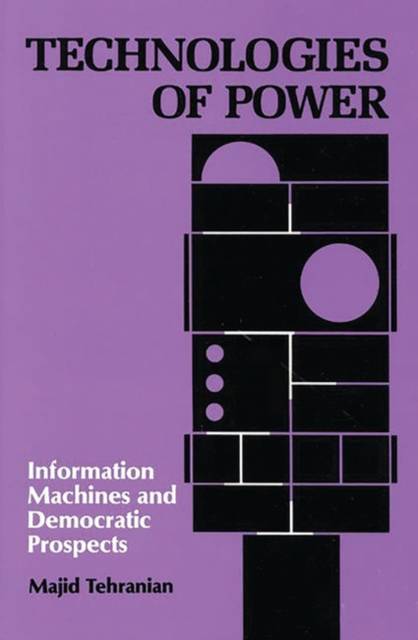
Within a comparative, theoretical and global network, this volume focuses on the impact of information technologies on the prospects for democratic development. It deals with the hopes as well as the fears for democracy and development that have emerged out of the current technological revolution in information and communication. The volume argues that information technologies have historically played a dual and paradoxical role in political formations. Generally, the Big Media (the national press, broadcasting and mainframe computers) have served the centralizing forces, while the Small Media (the alternative press, small scale audio-video production and transmission facilities and increasingly personal computing networking) have provided the channel for community resistance and mobilization. The volume argues that the new information technologies, like the old, should be viewed neither as technologies of freedom nor of tyranny but primarily as technologies of power that lock into existing or emerging techno-structures of power.
Specificaties
Betrokkenen
- Auteur(s):
- Uitgeverij:
Inhoud
- Aantal bladzijden:
- 272
- Taal:
- Engels
- Reeks:
Eigenschappen
- Productcode (EAN):
- 9780893912802
- Verschijningsdatum:
- 1/01/1990
- Uitvoering:
- Hardcover
- Formaat:
- Genaaid
- Afmetingen:
- 156 mm x 234 mm
- Gewicht:
- 576 g



Alleen bij Standaard Boekhandel
+ 339 punten op je klantenkaart van Standaard Boekhandel
Cadeau

AANGERADEN


Beoordelingen
We publiceren alleen reviews die voldoen aan de voorwaarden voor reviews. Bekijk onze voorwaarden voor reviews.