


- Afhalen na 1 uur in een winkel met voorraad
- Gratis thuislevering in België vanaf € 30
- Ruim aanbod met 7 miljoen producten
- Afhalen na 1 uur in een winkel met voorraad
- Gratis thuislevering in België vanaf € 30
- Ruim aanbod met 7 miljoen producten





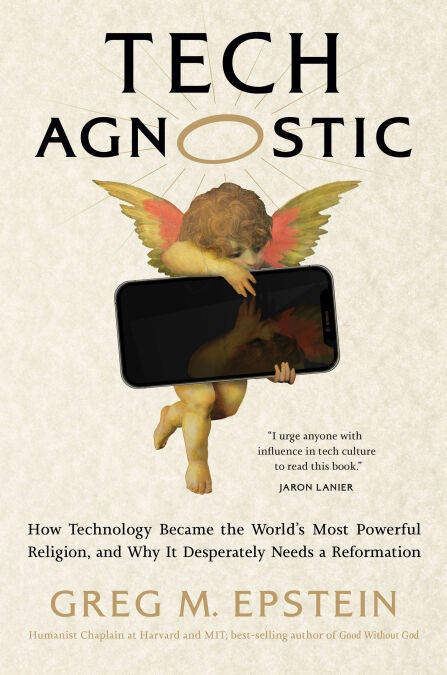
Tech Agnostic E-BOOK
How Technology Became the World's Most Powerful Religion, and Why It Desperately Needs a Reformation
Greg Epstein
E-book | Engels
€ 29,52
+ 29 punten
Uitvoering
Omschrijving
An urgently needed exploration of global technology worship, and a measured case for skepticism and agnosticism as a way of life, from the New York Times–bestselling author of Good without God.
Today’s technology has overtaken religion as the chief influence on twenty-first century life and community. In Tech Agnostic, Harvard and MIT’s influential humanist chaplain Greg Epstein explores what it means to be a critical thinker with respect to this new faith. Encouraging readers to reassert their common humanity beyond the seductive sheen of “tech,” this book argues for tech agnosticism—not worship—as a way of life. Without suggesting we return to a mythical pre-tech past, Epstein shows why we must maintain a freethinking critical perspective toward innovation until it proves itself worthy of our faith or not.
Epstein asks probing questions that center humanity at the heart of engineering: Who profits from an uncritical faith in technology? How can we remedy technology’s problems while retaining its benefits? Showing how unbelief has always served humanity, Epstein revisits the historical apostates, skeptics, mystics, Cassandras, heretics, and whistleblowers who embody the tech reformation we desperately need. He argues that we must learn how to collectively demand that technology serve our pursuit of human lives that are deeply worth living.
In our tumultuous era of religious extremism and rampant capitalism, Tech Agnostic offers a new path forward, where we maintain enough critical distance to remember that all that glitters is not gold—nor is it God.
Today’s technology has overtaken religion as the chief influence on twenty-first century life and community. In Tech Agnostic, Harvard and MIT’s influential humanist chaplain Greg Epstein explores what it means to be a critical thinker with respect to this new faith. Encouraging readers to reassert their common humanity beyond the seductive sheen of “tech,” this book argues for tech agnosticism—not worship—as a way of life. Without suggesting we return to a mythical pre-tech past, Epstein shows why we must maintain a freethinking critical perspective toward innovation until it proves itself worthy of our faith or not.
Epstein asks probing questions that center humanity at the heart of engineering: Who profits from an uncritical faith in technology? How can we remedy technology’s problems while retaining its benefits? Showing how unbelief has always served humanity, Epstein revisits the historical apostates, skeptics, mystics, Cassandras, heretics, and whistleblowers who embody the tech reformation we desperately need. He argues that we must learn how to collectively demand that technology serve our pursuit of human lives that are deeply worth living.
In our tumultuous era of religious extremism and rampant capitalism, Tech Agnostic offers a new path forward, where we maintain enough critical distance to remember that all that glitters is not gold—nor is it God.
Specificaties
Betrokkenen
- Auteur(s):
- Uitgeverij:
Inhoud
- Aantal bladzijden:
- 368
- Taal:
- Engels
Eigenschappen
- Productcode (EAN):
- 9780262379755
- Verschijningsdatum:
- 28/10/2024
- Uitvoering:
- E-book
- Beveiligd met:
- Adobe DRM
- Formaat:
- ePub


Alleen bij Standaard Boekhandel
+ 29 punten op je klantenkaart van Standaard Boekhandel

Beoordelingen
We publiceren alleen reviews die voldoen aan de voorwaarden voor reviews. Bekijk onze voorwaarden voor reviews.